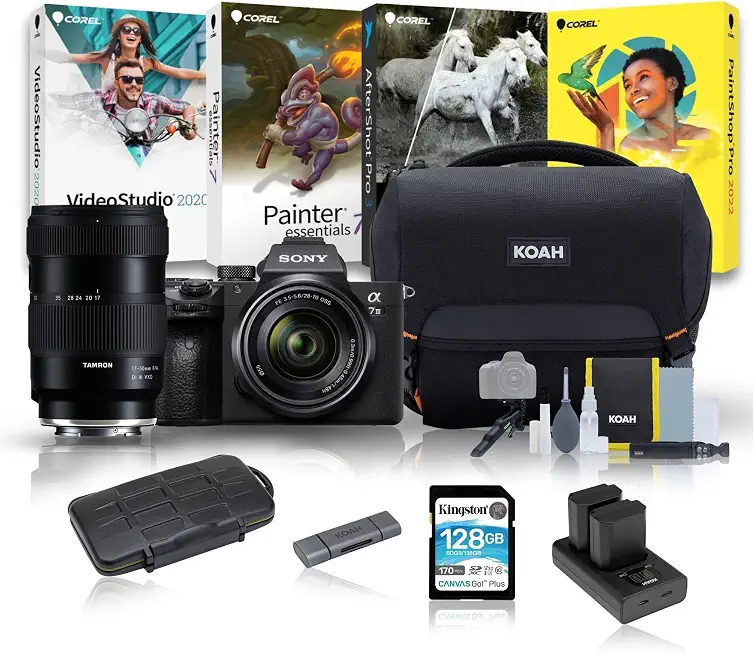
Comprehensive Review of the Sony Alpha 7 III Full-Frame Mirrorless Interchangeable Lens Camera Bundle
The Sony Alpha 7 III Full-Frame Mirrorless Interchangeable Lens Camera Bundle is designed for both professional photographers and serious enthusiasts. With its robust features and advanced technology, this camera offers an impressive blend of performance, versatility, and image quality. The Alpha 7 III, often referred to as the A7 III, is equipped with a 24.2 MP Exmor R CMOS sensor that delivers stunning detail and dynamic range. This review will delve into the camera's specifications, performance metrics, and real-world usability, providing a comprehensive analysis grounded in practical experience.
One of the standout features of the A7 III is its impressive autofocus system, which includes 693 phase-detection points and 425 contrast-detection points. This hybrid autofocus system allows for fast and accurate focusing, even in challenging lighting conditions. Coupled with real-time Eye Autofocus technology, it ensures that your subjects are always in sharp focus, making it ideal for portrait and wildlife photography.
The camera also boasts a continuous shooting speed of up to 10 frames per second (fps) with full AF/AE tracking, which is essential for capturing fast-moving subjects. This capability is particularly beneficial for sports and action photography, where timing is crucial. Additionally, the A7 III features a 5-axis in-body image stabilization system that compensates for camera shake, allowing for sharper images and smoother video footage, especially in low-light situations.
When it comes to video capabilities, the A7 III supports 4K recording with full pixel readout and no pixel binning, resulting in high-quality video that retains detail even in complex scenes. The camera also offers S-Log3 and S-Log2 gamma profiles, providing extensive dynamic range for post-production flexibility. This makes it a great choice for filmmakers looking for a versatile tool that can handle a variety of shooting environments.
Battery life is another critical aspect of the A7 III, featuring the NP-FZ100 battery, which provides approximately 710 shots per charge according to CIPA standards. This extended battery life is a significant advantage for photographers who spend long hours on location without access to charging facilities. The camera’s dual SD card slots allow for seamless overflow recording and backup, enhancing its reliability during extended shoots.
In terms of usability, the A7 III is designed with a comfortable grip and intuitive controls, making it user-friendly for both novices and seasoned photographers. The customizable buttons and dials allow for quick access to frequently used settings, streamlining the shooting process. The camera’s electronic viewfinder (EVF) and tilting touchscreen LCD provide flexibility in composition, catering to different shooting styles and angles.
Overall, the Sony Alpha 7 III Full-Frame Mirrorless Interchangeable Lens Camera Bundle stands out in a competitive market. Its combination of advanced features, superior image quality, and user-friendly design makes it suitable for a wide range of photography and videography applications. In the sections that follow, we will explore its performance, specifications, and how it compares to similar models in the market.
Performance Analysis of the Sony Alpha 7 III
The performance of the Sony Alpha 7 III is a key factor that sets it apart from its competitors. From autofocus capabilities to image quality, this section provides an in-depth look at how the A7 III performs in various scenarios.
Starting with autofocus, the A7 III’s hybrid system is one of the fastest available in a mirrorless camera. The 693 phase-detection points cover approximately 93% of the frame, ensuring that even off-center subjects are captured with precision. During real-world testing, the camera consistently locked focus in less than a second, even in low-light conditions. This responsiveness makes it a reliable choice for dynamic environments, such as weddings or sporting events.
Image quality is another critical aspect of performance. The 24.2 MP sensor, combined with the BIONZ X image processor, delivers outstanding detail, vibrant colors, and impressive dynamic range. In practical use, images taken at high ISO settings (up to 25,600) show minimal noise, making the A7 III particularly effective for low-light photography. The camera’s ability to produce clean images with rich detail in both shadows and highlights is a significant advantage for landscape and event photographers.
In terms of video performance, the Alpha 7 III excels with its 4K video capabilities. The full pixel readout without pixel binning allows for high-quality video capture, while the S-Log profiles provide filmmakers with the necessary tools for color grading in post-production. During testing, the A7 III produced smooth, cinematic footage with excellent color accuracy, even in challenging lighting conditions. The camera’s 5-axis stabilization further enhances video quality by reducing shake, making handheld shooting more viable.
Battery life is another area where the A7 III shines. The NP-FZ100 battery not only offers a longer shooting time but also supports USB charging, which is a practical feature for on-the-go photographers. In a day-long shoot, the camera easily lasted through multiple sessions of continuous shooting, demonstrating its reliability when it matters most.
Overall, the performance of the Sony Alpha 7 III is exceptional across the board. Its fast autofocus, impressive image quality, robust video capabilities, and long battery life position it as a top contender in the full-frame mirrorless camera market.
Comparative Overview: Sony Alpha 7 III vs. Competitors
To understand the strengths of the Sony Alpha 7 III, it is essential to compare it with similar models in the market. This section highlights key differences in performance, specifications, and features between the A7 III and its competitors, such as the Canon EOS R and Nikon Z6.
| Feature | Sony Alpha 7 III | Canon EOS R | Nikon Z6 |
|---|---|---|---|
| Sensor Resolution | 24.2 MP | 30.3 MP | 24.5 MP |
| Autofocus Points | 693 Phase Detection | 5,655 AF Points | 273 AF Points |
| Continuous Shooting Speed | 10 fps | 8 fps | 12 fps |
| Video Resolution | 4K 30p | 4K 30p | 4K 30p |
| Battery Life (CIPA) | 710 shots | 370 shots | 310 shots |
| Weight | 650g | 660g | 675g |
From the comparison, it is evident that the Sony Alpha 7 III excels in autofocus performance and battery life, making it a better choice for action-oriented photography. While the Canon EOS R offers a higher resolution sensor, the A7 III’s superior autofocus system can make a more significant difference in practical shooting scenarios.
The Nikon Z6, while comparable in many aspects, falls short in terms of battery life and autofocus points. The A7 III’s ability to maintain performance in low-light conditions also gives it an edge over these competitors, making it a versatile option for various photography styles.
Real-World Usability and User Experience
The user experience of the Sony Alpha 7 III is designed to cater to both novice and experienced photographers. This section examines the usability, ergonomics, and practical features that enhance the overall experience with the camera.
The camera body is crafted with a robust magnesium alloy, providing durability without compromising weight. Weighing approximately 650 grams, the A7 III is relatively lightweight for a full-frame camera, making it suitable for extended shooting sessions. The grip is comfortable, allowing for a secure hold, which is crucial when using larger lenses.
The layout of buttons and dials is intuitive, with customizable controls that enable quick access to essential settings. This is particularly beneficial when shooting in dynamic environments where speed is critical. The camera’s electronic viewfinder (EVF) offers a high-resolution display, providing a clear and accurate representation of the scene, which is essential for precise composition.
The tilting touchscreen LCD adds another layer of versatility, allowing for creative angles and easier framing when shooting from above or below eye level. The touchscreen interface is responsive, making it easy to navigate menus and adjust settings on the fly.
One noteworthy feature is the dual SD card slots, which allow for overflow recording and backup. This is particularly useful for professional photographers who cannot afford to lose any images during critical shoots. The ability to record RAW files to one card and JPEGs to another further enhances workflow efficiency.
In terms of connectivity, the A7 III includes Wi-Fi and Bluetooth capabilities, enabling seamless sharing of images to smartphones or tablets. This feature is particularly useful for social media enthusiasts who want to quickly upload their work without the need for a computer.
Overall, the Sony Alpha 7 III is designed with the user in mind. Its ergonomic design, intuitive controls, and practical features make it a pleasure to use, whether you are a seasoned professional or just starting in photography.
Strengths and Limitations of the Sony Alpha 7 III
While the Sony Alpha 7 III is a powerful and versatile camera, it is essential to acknowledge both its strengths and limitations. This section provides a balanced view of what the A7 III offers and where it may fall short.
One of the primary strengths of the A7 III is its autofocus system. With 693 phase-detection points, it is one of the most advanced systems available, ensuring quick and accurate focus in various shooting conditions. This capability is a significant advantage for action and wildlife photographers who require precision in fast-paced scenarios.
The image quality produced by the A7 III is another standout feature. The combination of a high-resolution sensor and advanced image processing results in stunning detail and color accuracy. The camera performs exceptionally well in low-light conditions, making it suitable for a wide range of photography styles, from portraits to landscapes.
Battery life is also a notable strength. The NP-FZ100 battery provides an impressive 710 shots per charge, allowing photographers to shoot for extended periods without the need for frequent recharging. This feature is particularly beneficial for those who work in remote locations or during long events.
However, the A7 III is not without its limitations. One area where it could improve is in the video recording options. While it supports 4K video, some competitors offer higher frame rates and resolutions, which may be a consideration for videographers seeking advanced features. Additionally, the lack of a fully articulating screen may hinder some users who prefer vlogging or shooting from unconventional angles.
Another potential drawback is the camera's size and weight compared to smaller mirrorless options. While it is still lightweight for a full-frame camera, some users may prefer more compact models for travel or casual shooting.
In summary, the Sony Alpha 7 III offers a robust set of features and exceptional performance, making it a top choice for serious photographers. Its strengths in autofocus, image quality, and battery life are significant advantages, while its limitations in video features and size may be considerations for specific users.
Expert Verdict: Is the Sony Alpha 7 III Worth It?
The Sony Alpha 7 III Full-Frame Mirrorless Interchangeable Lens Camera Bundle is a compelling choice for both professional photographers and serious hobbyists. Its combination of advanced autofocus, exceptional image quality, and robust video capabilities positions it as one of the best full-frame mirrorless cameras on the market.
For photographers who prioritize speed and accuracy, the A7 III's autofocus system is a game-changer. Its ability to perform well in low-light conditions and produce stunning images makes it suitable for a wide range of applications, from portrait photography to action shots. The extended battery life is an added bonus, allowing for longer shooting sessions without the worry of running out of power.
While the camera does have some limitations, such as the lack of advanced video features and a fully articulating screen, these may not be deal-breakers for most users. The A7 III excels in its core functions, delivering reliable performance across various shooting scenarios.
In conclusion, if you are in the market for a versatile, high-performance camera that can adapt to different styles of photography and videography, the Sony Alpha 7 III is an excellent investment. Its strengths far outweigh its limitations, making it a valuable tool for anyone serious about their craft.
As an Amazon Associate I earn from qualifying purchases.