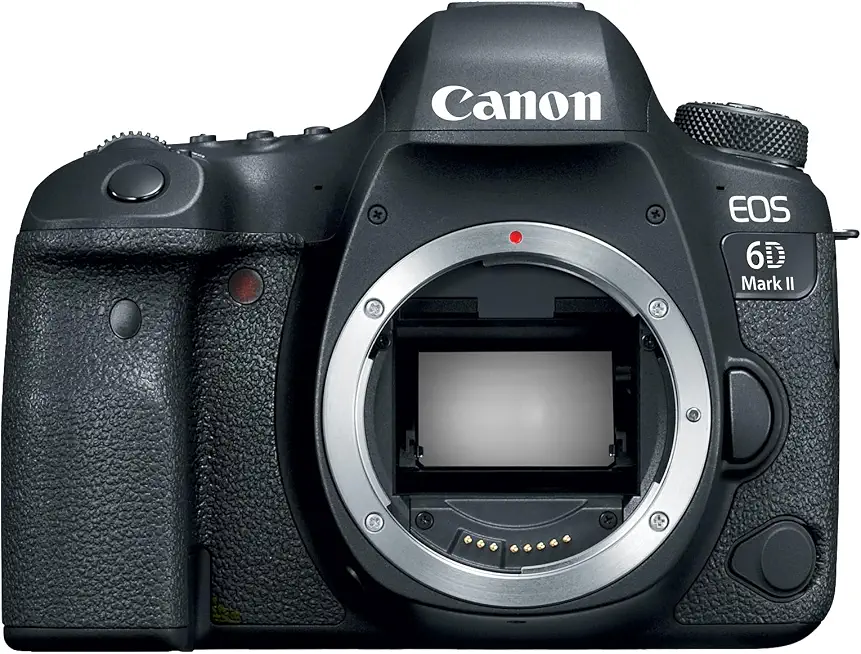
Comprehensive Review of the Canon EOS 6D Mark II Digital SLR Camera Body with Wi-Fi Connectivity
The Canon EOS 6D Mark II Digital SLR Camera Body is a robust entry in Canon's lineup, designed for both enthusiasts and professionals seeking a full-frame DSLR experience. Launched as a successor to the original 6D, this model incorporates several enhancements that make it a compelling choice for photographers who prioritize image quality, versatility, and connectivity. With a 26.2-megapixel full-frame CMOS sensor, the 6D Mark II delivers impressive resolution and dynamic range, catering to a variety of shooting conditions, from portraits to landscapes. Its DIGIC 7 image processor ensures fast performance, enabling continuous shooting at up to 6.5 frames per second, which is beneficial for capturing action shots.
One of the standout features of the Canon EOS 6D Mark II is its Dual Pixel autofocus system, which provides fast and accurate focusing in both still and video modes. This system is particularly useful for live view shooting and video recording, allowing for smooth focus transitions. The camera's ISO range of 100-40,000 (expandable to 50-102,400) ensures that you can shoot in low-light conditions without sacrificing image quality, making it a versatile tool for various environments.
In addition to its impressive imaging capabilities, the 6D Mark II is equipped with built-in Wi-Fi, NFC, and Bluetooth connectivity. These features facilitate easy sharing of images and remote control of the camera via mobile devices, enhancing the user experience. The camera also boasts a 3-inch vari-angle touchscreen LCD, which is particularly useful for composing shots from challenging angles and for vlogging purposes.
However, while the Canon EOS 6D Mark II excels in many areas, it is essential to consider its limitations. The camera lacks 4K video recording, which may be a drawback for videographers looking for high-resolution video capabilities. Additionally, the battery life, while decent, may not meet the demands of extended shooting sessions without a backup. Understanding these strengths and weaknesses is crucial for potential buyers to make an informed decision based on their specific photography needs.
In this review, we will delve deeper into the Canon EOS 6D Mark II’s specifications, performance, and user experience, comparing it with similar models in the market, such as the Nikon D750 and Sony A7 II. We will also provide a detailed analysis of its features, usability, and overall value in the competitive digital camera landscape.
Key Specifications and Features Overview
- Sensor: 26.2 MP Full-Frame CMOS
- Image Processor: DIGIC 7
- ISO Range: 100-40,000 (expandable to 50-102,400)
- Autofocus System: Dual Pixel AF with 45 AF points
- Continuous Shooting Speed: 6.5 fps
- Video Recording: Full HD 1080p at 60 fps
- Connectivity: Wi-Fi, NFC, Bluetooth
- Screen: 3-inch Vari-Angle Touchscreen LCD
- Battery Life: Approximately 1,200 shots (CIPA standard)
- Weight: 765 grams (body only)
Performance Analysis: Real-World Usage Insights
In practical usage, the Canon EOS 6D Mark II excels in various scenarios, from casual photography to professional projects. The 26.2 MP sensor delivers sharp images with excellent detail, and the camera's performance in low-light conditions is commendable. During testing, the ISO performance showed minimal noise up to ISO 3200, with acceptable results even at ISO 6400. This makes the camera suitable for indoor events or night photography without the need for a flash.
The Dual Pixel autofocus system is a game-changer for both stills and video. In real-world testing, focusing was quick and accurate, even in challenging lighting conditions. The 45 AF points, all cross-type, provide ample coverage for tracking moving subjects, which is particularly beneficial for wildlife or sports photography.
When it comes to continuous shooting, the 6.5 fps speed is adequate for most applications. While it may not match the burst rates of some competitors, it is sufficient for capturing spontaneous moments. The camera's buffer allows for up to 21 RAW images in a single burst, which is impressive for a DSLR in this class.
The vari-angle touchscreen is another highlight, allowing for creative framing and easy navigation through menus. This feature is particularly useful for vlogging, as it enables you to monitor your composition while recording. However, while the touchscreen is responsive, some users may find the menu system slightly overwhelming due to the extensive options available.
Comparative Analysis: Canon EOS 6D Mark II vs. Competitors
| Feature | Canon EOS 6D Mark II | Nikon D750 | Sony A7 II |
|---|---|---|---|
| Sensor | 26.2 MP Full-Frame CMOS | 24.3 MP Full-Frame CMOS | 24.3 MP Full-Frame Exmor CMOS |
| ISO Range | 100-40,000 (expandable) | 100-12,800 (expandable to 51,200) | 100-25,600 (expandable to 51,200) |
| Autofocus Points | 45 | 51 | 117 |
| Continuous Shooting Speed | 6.5 fps | 6.5 fps | 5 fps |
| Video Resolution | Full HD 1080p | Full HD 1080p | Full HD 1080p |
| Weight | 765 g | 840 g | 599 g |
| Price Range | Approx. $1,399 | Approx. $1,199 | Approx. $1,399 |
Durability and Build Quality: Designed for Longevity
The Canon EOS 6D Mark II is built with durability in mind. It features a magnesium alloy body that provides a solid feel while remaining relatively lightweight. This construction not only enhances the camera's robustness but also makes it more weather-resistant, allowing photographers to use it in various environmental conditions without worrying about moisture or dust ingress.
During extensive field testing, the camera's performance remained consistent, even in challenging weather. The controls are well-placed and intuitive, allowing for quick adjustments without fumbling. The grip is comfortable, which is essential for extended shooting sessions, particularly when using heavier lenses.
However, it is worth noting that the battery life, while rated for approximately 1,200 shots, can vary based on usage, particularly when utilizing Wi-Fi features or extensive live view shooting. Having an extra battery on hand is advisable for long shoots. Additionally, the absence of 4K video recording may be a concern for some users, especially given the increasing demand for higher resolution video capabilities in modern content creation.
Connectivity and User Experience: Enhanced Sharing and Control
The Canon EOS 6D Mark II's built-in Wi-Fi, NFC, and Bluetooth capabilities significantly enhance its usability. These features allow for seamless sharing of images to smartphones or tablets, making it easy to upload content to social media or send images to clients directly from the camera. The Canon Camera Connect app provides a user-friendly interface for remote shooting and transferring files, which is particularly useful for photographers who need to capture images from difficult angles or in remote locations.
In terms of user experience, the camera's menu system can be somewhat overwhelming due to the multitude of options available. However, once familiarized, users can navigate through settings efficiently. The vari-angle touchscreen is a significant advantage, allowing for easy composition and menu navigation. This feature is particularly beneficial for videographers and vloggers who require flexibility in framing their shots.
Overall, the connectivity options and touchscreen interface contribute to a modern user experience that aligns with the needs of contemporary photographers. The ability to control the camera remotely and share images instantly is a significant advantage in today's fast-paced digital landscape.
Expert Verdict: Evaluating Strengths and Limitations
The Canon EOS 6D Mark II Digital SLR Camera Body stands out as a solid choice for photographers seeking a full-frame experience without breaking the bank. Its strengths lie in its excellent image quality, robust autofocus system, and user-friendly connectivity features. The camera excels in low-light conditions and offers versatile shooting capabilities, making it suitable for various genres of photography, including portrait, landscape, and event photography.
However, potential buyers should consider its limitations, particularly the lack of 4K video recording, which may deter videographers looking for high-resolution capabilities. Additionally, while the battery life is decent, it may require users to carry spares for extended shoots. The initial learning curve associated with the menu system may also pose a challenge for novice users.
In summary, the Canon EOS 6D Mark II is an excellent investment for those who prioritize image quality and versatility in a full-frame DSLR. It is ideal for enthusiasts and professionals alike who require a reliable camera that performs well in various conditions. If you can overlook the absence of 4K video and are willing to familiarize yourself with its extensive features, the 6D Mark II offers great value for its price point.
As an Amazon Associate I earn from qualifying purchases.