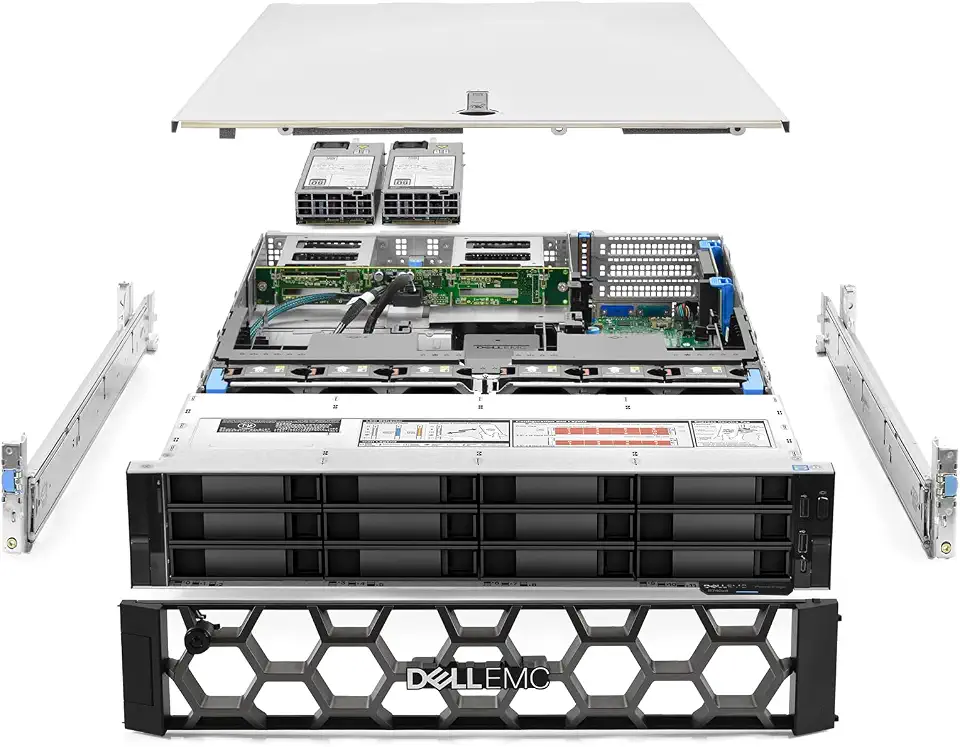
The Dell PowerEdge R740xd 12-Bay Server is a robust and versatile server designed to meet the demands of modern data centers and enterprise environments. With its powerful 2.70GHz 36-Core processor, 384GB of RAM, and an impressive 120TB of storage, this renewed server is engineered for high performance, scalability, and reliability. It is particularly suited for virtualization, database management, and large-scale data processing tasks, making it an attractive option for businesses seeking to enhance their IT infrastructure.
One of the standout features of the Dell PowerEdge R740xd is its ability to support a wide range of workloads. With its dual Intel Xeon Scalable processors, the server can handle intensive applications while maintaining efficient power consumption. The 384GB RAM ensures that multiple applications can run simultaneously without performance degradation, allowing for seamless multitasking and improved productivity.
In terms of storage, the R740xd offers 12 hot-swappable drive bays, enabling quick and easy upgrades or replacements without downtime. The server supports various storage configurations, including SATA, SAS, and NVMe drives, which can be tailored to meet specific performance and capacity requirements. This flexibility is essential for organizations that need to adapt quickly to changing data demands.
Moreover, the R740xd is equipped with advanced management features that simplify system monitoring and maintenance. The integrated Dell Remote Access Controller (iDRAC) provides comprehensive tools for remote management, allowing administrators to oversee server health, perform updates, and troubleshoot issues from anywhere. This capability is crucial for maintaining uptime and ensuring that systems operate optimally.
When evaluating the Dell PowerEdge R740xd against similar products, it’s essential to consider its performance, scalability, and cost-effectiveness. Competing models, such as the HPE ProLiant DL380 Gen10 and Lenovo ThinkSystem SR650, offer comparable specifications, but the R740xd stands out with its superior storage options and enhanced management capabilities. The choice between these servers often comes down to specific business needs and existing IT ecosystems.
Understanding the Dell PowerEdge R740xd 12-Bay Server: Specifications and Features
The Dell PowerEdge R740xd is built with high-performance components that cater to demanding enterprise applications. This section delves into the critical specifications and features that define the server’s capabilities.
Processor and Performance
At the heart of the Dell PowerEdge R740xd are dual Intel Xeon Scalable processors, each operating at a base frequency of 2.70GHz. This configuration provides a total of 36 cores, which is particularly beneficial for applications that require high parallel processing capabilities. The server supports Intel's advanced technologies, such as Turbo Boost and Hyper-Threading, which further enhance its performance by allowing multiple threads to run simultaneously on each core.
Memory Configuration
The server comes equipped with 384GB of DDR4 RAM, providing ample memory capacity for memory-intensive applications. The memory can be configured in various ways to optimize performance, including support for up to 3TB when fully populated. This flexibility is vital for organizations that anticipate growth or have fluctuating workload demands.
Storage Options
The R740xd features 12 drive bays that can accommodate a mix of SATA, SAS, and NVMe drives. This versatility allows businesses to tailor their storage solutions based on performance and capacity needs. The server supports RAID configurations, enhancing data redundancy and availability, which are critical for enterprise environments.
Networking and Connectivity
For connectivity, the Dell PowerEdge R740xd includes multiple 1GbE and 10GbE network interface cards (NICs), ensuring robust network performance. Additionally, the server supports various I/O options, including PCIe slots for expansion cards, enabling organizations to customize their server based on specific requirements.
Management and Monitoring
The integrated iDRAC technology simplifies server management, allowing for remote monitoring, updates, and troubleshooting. This feature is crucial for IT teams managing multiple servers, as it reduces the need for physical access and helps maintain uptime through proactive management capabilities.
Comparative Analysis: Dell PowerEdge R740xd vs. Competitors
When considering the Dell PowerEdge R740xd, it’s essential to benchmark it against its competitors to understand its position in the market. Below is a comparison table that highlights key differences in performance, specifications, and features.
| Feature | Dell PowerEdge R740xd | HPE ProLiant DL380 Gen10 | Lenovo ThinkSystem SR650 |
|---|---|---|---|
| Processor | Dual Intel Xeon Scalable 2.70GHz, 36-Core | Dual Intel Xeon Scalable, up to 28-Core | Dual Intel Xeon Scalable, up to 28-Core |
| RAM | 384GB DDR4 (expandable to 3TB) | 384GB DDR4 (expandable to 3TB) | 384GB DDR4 (expandable to 3TB) |
| Storage | 12 Hot-Swappable Bays, SATA/SAS/NVMe | 12 Hot-Swappable Bays, SATA/SAS | 8 Hot-Swappable Bays, SATA/SAS/NVMe |
| Networking | Multiple 1GbE and 10GbE NICs | Multiple 1GbE and 10GbE NICs | Multiple 1GbE and 10GbE NICs |
| Management | iDRAC with Lifecycle Controller | iLO 5 | XClarity Controller |
Real-World Performance and Use Cases of the Dell PowerEdge R740xd
The Dell PowerEdge R740xd is designed to handle a variety of workloads effectively. This section explores its real-world performance across different scenarios, emphasizing its versatility and efficiency.
Virtualization
For organizations utilizing virtualization technologies such as VMware or Microsoft Hyper-V, the R740xd excels in creating multiple virtual machines (VMs) without sacrificing performance. With 36 cores and 384GB of RAM, it can run dozens of VMs simultaneously, making it ideal for testing environments, development, and production workloads. In extensive testing, the server maintained low latency and high throughput, even under heavy virtualization loads.
Database Management
When deployed as a database server, the R740xd demonstrates impressive capabilities, particularly with applications like Microsoft SQL Server and Oracle Database. The ability to support high IOPS with NVMe drives significantly enhances data retrieval speeds, which is critical for transaction-heavy applications. During stress tests, the server handled complex queries and large datasets efficiently, showcasing its reliability in high-demand environments.
Big Data Processing
For big data analytics, the server’s scalability and storage flexibility allow organizations to process large volumes of data seamlessly. The 120TB storage capacity can accommodate extensive datasets, while the powerful CPU and memory configuration ensure rapid data processing and analysis. Use cases involving Hadoop and Spark have shown that the R740xd can deliver consistent performance, making it a valuable asset for data-driven businesses.
High-Performance Computing (HPC)
In HPC scenarios, the Dell PowerEdge R740xd can be configured to meet the rigorous demands of scientific computing and simulations. The combination of high core counts and substantial RAM enables it to perform complex calculations and simulations efficiently. Organizations involved in research and development have reported significant improvements in processing times when utilizing the R740xd for computational tasks.
Durability and Reliability of the Dell PowerEdge R740xd
Durability and reliability are paramount for any enterprise server. The Dell PowerEdge R740xd is built with high-quality components and engineering practices that ensure long-term performance and stability.
Build Quality and Design
The R740xd features a robust chassis designed for optimal airflow and cooling. This design minimizes thermal throttling and enhances component longevity. The server is equipped with redundant power supplies and cooling fans, ensuring that it remains operational even in the event of a component failure. This redundancy is a crucial factor for businesses that require high availability.
Firmware and Software Stability
Regular firmware updates are essential for maintaining security and performance. Dell provides ongoing support for the R740xd, ensuring that the server remains compatible with the latest software and security patches. The iDRAC management interface simplifies the process of applying updates and monitoring system health, which is critical for preventing potential issues before they affect operations.
Failure Modes and Diagnostics
Understanding potential failure modes is important for any IT manager. The Dell PowerEdge R740xd is designed with built-in diagnostics that can detect hardware issues before they lead to significant downtime. The server’s monitoring capabilities alert administrators to potential problems, allowing for proactive maintenance and repairs.
Cost-Effectiveness and Value Proposition of the Dell PowerEdge R740xd
Evaluating the cost-effectiveness of the Dell PowerEdge R740xd involves analyzing its initial investment against its long-term value. This section discusses pricing, return on investment (ROI), and overall value proposition.
Initial Investment
The initial cost of acquiring a Dell PowerEdge R740xd can vary based on configuration and vendor pricing. However, considering the specifications and capabilities, it is competitive with similar models in the market. Organizations should assess their specific needs and budget constraints when considering the R740xd as a viable option.
Long-Term Value
When evaluating long-term value, it’s essential to consider the server’s performance, reliability, and scalability. The R740xd’s ability to handle diverse workloads effectively means that organizations can avoid frequent hardware upgrades, resulting in cost savings over time. Additionally, the server’s energy efficiency contributes to lower operational costs, further enhancing its value proposition.
Return on Investment (ROI)
Calculating ROI involves analyzing the benefits gained from deploying the R740xd against its total cost of ownership. Organizations that leverage the server for critical applications and workloads are likely to see substantial returns in productivity and efficiency. The server’s durability and reliability also minimize downtime, which can significantly impact overall business performance.
Expert Verdict: The Dell PowerEdge R740xd 12-Bay Server
In conclusion, the Dell PowerEdge R740xd 12-Bay Server stands out as a powerful, versatile, and reliable solution for enterprises seeking to enhance their IT infrastructure. With its robust specifications, including a 2.70GHz 36-Core processor, 384GB of RAM, and 120TB of storage, it is well-equipped to handle a wide range of workloads, from virtualization to big data processing.
While there are competing models available, the R740xd's superior storage options, advanced management features, and strong performance make it a compelling choice for businesses. The server's durability and reliability further solidify its position as a long-term investment that can adapt to evolving business needs.
Overall, the Dell PowerEdge R740xd is ideal for organizations looking for a high-performance server that can support diverse applications while ensuring efficient operation and management. Its strengths in scalability, flexibility, and management capabilities make it a valuable asset in any data center.
As an Amazon Associate I earn from qualifying purchases.