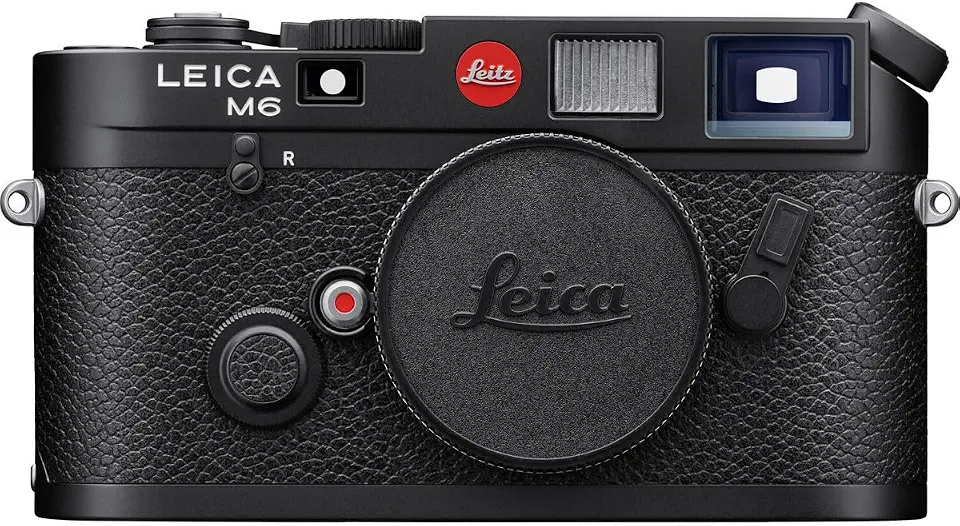
The Leica M6 35mm Film Rangefinder Camera is a classic piece of photographic equipment that has stood the test of time, revered by both amateur and professional photographers alike. This camera, which was first introduced in 1984 and produced until 1998, is a testament to Leica's commitment to quality and precision in photography. The M6 combines a traditional rangefinder system with modern features that enhance usability, making it a popular choice for those who appreciate the art of film photography. With its robust build, exceptional optical performance, and intuitive controls, the M6 offers a unique shooting experience that digital cameras often struggle to replicate.
One of the standout features of the Leica M6 is its mechanical simplicity paired with advanced metering capabilities. Unlike many modern cameras that rely heavily on electronic components, the M6 operates on a fully mechanical basis, ensuring reliability even in challenging conditions. This is particularly advantageous for photographers who value the tactile feedback and direct control that comes with manual settings. The M6’s built-in light meter is a significant advancement for its time, allowing for accurate exposure readings while still maintaining the camera's classic feel.
In terms of design, the M6 is compact and lightweight, making it an ideal companion for street photography and travel. Its discreet profile allows photographers to capture candid moments without drawing attention. The camera is equipped with a bright viewfinder that provides a 0.72x magnification, making it easy to compose shots accurately, even in low light. The M6 also supports a wide range of Leica lenses, known for their exceptional quality and sharpness, further enhancing the camera's versatility.
While the Leica M6 is often celebrated for its strengths, it also has limitations that potential buyers should consider. The lack of autofocus can be a drawback for some users, particularly those accustomed to the convenience of modern digital cameras. Additionally, the film loading process requires a level of familiarity that may pose a challenge for beginners. However, for those willing to invest the time to learn, the rewards of shooting with the M6 can be substantial.
This review will delve deeper into the various aspects of the Leica M6 35mm Film Rangefinder Camera, including its performance, usability, and how it compares against similar models in the market. By examining these factors, you can make an informed decision about whether the M6 is the right camera for your photographic needs.
Leica M6 35mm Film Rangefinder Camera: An In-Depth Analysis
Design and Build Quality
The Leica M6 is renowned for its exceptional design and build quality, which are hallmarks of the Leica brand. Constructed from a solid brass body and covered with durable leatherette, the M6 not only feels premium in hand but also withstands the rigors of daily use. This camera is designed to last, with many units still functioning perfectly decades after their initial release.
The dimensions of the M6 are compact for a 35mm rangefinder, measuring approximately 138 x 80 x 38 mm and weighing around 600 grams without a lens. This portability makes it an excellent choice for street photographers and travelers who need a reliable camera that does not compromise on quality.
The viewfinder is another standout feature. With a 0.72x magnification, it provides a clear and bright image, making it easy to frame your shots accurately. The rangefinder patch is also well-defined, allowing for precise focusing, even with fast-moving subjects. The camera's shutter speed dial is conveniently located on the top plate, providing easy access for quick adjustments. The overall layout of controls is intuitive, allowing photographers to focus on their composition rather than fumbling with settings.
Compared to similar models like the Canon P or the Nikon S3, the M6 holds its own in terms of build quality and usability. While the Canon P offers a more budget-friendly option, it lacks the sophisticated metering system of the M6. The Nikon S3, on the other hand, while also well-built, does not have the same level of lens compatibility as the M6, which supports a vast range of Leica lenses.
Performance and Usability
When it comes to performance, the Leica M6 excels in several key areas. The camera features a built-in TTL (through-the-lens) light meter, which provides accurate exposure readings in various lighting conditions. This metering system is a significant advantage over many older rangefinder models that rely solely on external light meters. The M6's meter operates on a simple scale, allowing you to quickly assess exposure without getting bogged down in complex settings.
In practical use, the M6 shines in low-light situations, where its fast lenses can make a substantial difference. Pairing the M6 with a fast lens, such as the Leica Summicron 50mm f/2, allows for stunning results in dimly lit environments. The camera's mechanical shutter operates silently, which is a crucial factor for street photography, as it enables you to capture moments without drawing attention.
However, the M6 does require a learning curve, particularly for those new to manual focus and exposure settings. While experienced photographers will appreciate the control this camera offers, beginners may find the absence of autofocus and automation challenging. Nevertheless, mastering these manual controls can lead to a deeper understanding of photography, ultimately enhancing your skills.
Lens Compatibility and Optical Performance
One of the most significant advantages of the Leica M6 is its compatibility with a wide range of Leica M mount lenses. This versatility allows photographers to choose from a selection of lenses that suit their specific needs, whether they require a wide-angle for landscapes or a fast prime for portraits. Leica lenses are renowned for their sharpness, color rendition, and bokeh quality, making them a perfect match for the M6.
For example, using the Leica Summilux 35mm f/1.4 lens with the M6 yields exceptional results, with images that are sharp from corner to corner and exhibit beautiful out-of-focus areas. This combination is particularly well-suited for street photography, where capturing fleeting moments with clarity is essential.
In comparison to other rangefinder systems, such as the Voigtländer Bessa series, the M6's lens selection is superior in terms of optical quality and performance. While Voigtländer offers some excellent lenses, they often do not match the same level of precision and build quality as Leica's offerings. The M6, therefore, provides a distinct advantage for photographers who prioritize optical excellence.
Comparative Performance Overview
| Feature | Leica M6 | Canon P | Nikon S3 |
|---|---|---|---|
| Build Quality | Solid brass, leatherette | Aluminum, plastic | Brass, chrome |
| Metering System | TTL, center-weighted | External meter required | External meter required |
| Viewfinder Magnification | 0.72x | 0.6x | 0.9x |
| Weight | 600g | 600g | 800g |
| Lens Compatibility | Leica M mount | Canon LTM | Nikon S mount |
Strengths and Limitations
The Leica M6 offers a range of strengths that make it a desirable choice for photographers. Its build quality is unmatched, providing durability and reliability that can withstand the test of time. The camera's mechanical operation ensures that it remains functional even in the absence of batteries, a crucial feature for those who shoot in remote locations.
Additionally, the M6's metering system is a significant advantage, allowing for accurate exposure readings without the need for external devices. The compatibility with a wide range of high-quality lenses further enhances its versatility, making it suitable for various photographic styles.
However, the M6 does come with limitations. The lack of autofocus can be a drawback for some, particularly those who are accustomed to the convenience of modern digital cameras. The learning curve associated with manual focus and exposure settings may also deter beginners. Moreover, the price point of the M6, while justified by its quality, may be a barrier for entry-level photographers.
Real-World Usage Scenarios
In practical terms, the Leica M6 excels in various shooting scenarios. For street photography, its compact size and quiet operation allow photographers to capture candid moments without intruding on the scene. The camera's fast lenses enable shooting in low light, making it ideal for urban environments at dusk or dawn.
For portrait photography, the M6 paired with a fast prime lens can produce stunning results, showcasing the subject with beautiful background blur. The camera's ability to render skin tones accurately and its sharpness make it a preferred choice for portraitists.
Landscape photographers also find value in the M6, especially when using wide-angle lenses. The camera's robust build and reliable performance in various weather conditions ensure that it can handle outdoor shooting without issues.
Expert Verdict: Is the Leica M6 Right for You?
In conclusion, the Leica M6 35mm Film Rangefinder Camera is an exceptional tool for photographers who value quality, precision, and the art of film photography. Its strengths lie in its build quality, metering capabilities, and compatibility with a wide range of lenses. While it does have limitations, particularly for those who prefer autofocus and automation, the rewards of mastering this camera can lead to a deeper appreciation of the photographic craft.
For street photographers, portraitists, and landscape enthusiasts, the M6 offers a unique shooting experience that can elevate your photography to new heights. However, potential buyers should weigh these factors against their own needs and preferences to determine if the M6 is the right fit for their photographic journey.
As an Amazon Associate I earn from qualifying purchases.