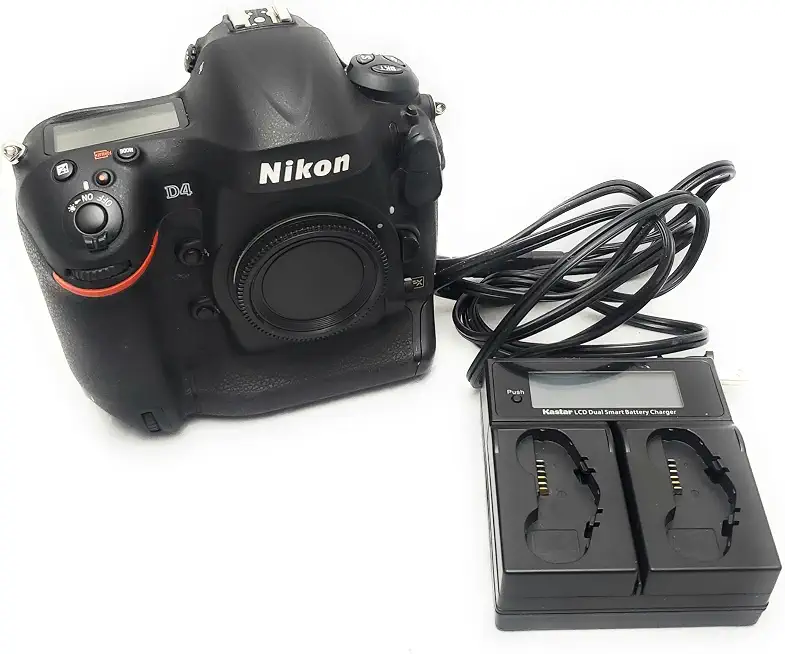
Nikon D4: A Comprehensive Review of the 16.2 MP CMOS FX Digital SLR with Full 1080p HD Video
The Nikon D4 16.2 MP CMOS FX Digital SLR is a professional-grade camera that has been meticulously engineered for photographers who demand high performance and versatility. Launched as a flagship model, it stands out in Nikon's impressive lineup of DSLRs, particularly for sports and wildlife photography due to its robust build and exceptional speed. With a full-frame sensor, the D4 captures stunning images with remarkable detail, even in challenging lighting conditions. In this review, we will delve into the camera's specifications, performance, usability, and how it compares to its competitors, providing you with a comprehensive understanding of what the Nikon D4 has to offer.
The D4 features a 16.2 MP CMOS sensor that provides superior image quality, especially in low-light environments, thanks to its impressive ISO range of 100 to 12800, expandable up to 50 to 204800. This expanded range allows for greater flexibility when shooting in dimly lit conditions, making it ideal for indoor sports events or nighttime photography. The camera's EXPEED 3 image processing engine further enhances image clarity and reduces noise, ensuring that your photos maintain vibrant colors and sharp details.
One of the standout features of the Nikon D4 is its autofocus system, which includes 51 focus points, 15 of which are cross-type sensors. This advanced autofocus capability allows for precise tracking of fast-moving subjects, a critical feature for action photographers. The camera can shoot continuously at 10 frames per second, making it an excellent choice for capturing fleeting moments, whether in sports, wildlife, or any fast-paced environment.
In addition to still photography, the Nikon D4 excels at video recording. It supports full 1080p HD video at various frame rates, including 30, 25, and 24 fps, providing filmmakers with the flexibility to create cinematic-quality footage. The camera also offers uncompressed HDMI output, allowing for high-quality video capture directly to an external recorder, which is a significant advantage for professional videographers.
Durability is another hallmark of the Nikon D4. Constructed with a magnesium alloy body, it is both lightweight and robust, designed to withstand the rigors of professional use. The camera is weather-sealed, providing protection against dust and moisture, which is essential for outdoor photography. This resilience ensures that the D4 can perform reliably in various environments, from humid jungles to arid deserts.
Overall, the Nikon D4 is designed for serious photographers who require a dependable tool that delivers exceptional performance across various shooting scenarios. Its combination of advanced features, superior image quality, and robust build makes it a standout choice for professionals. In the following sections, we will explore the camera's specifications, performance comparisons with similar models, and practical usage insights to help you determine if the Nikon D4 is the right camera for your needs.
Specifications Breakdown: Understanding the Nikon D4's Technical Features
The Nikon D4 is packed with advanced specifications that cater to the needs of professional photographers. Below is a detailed breakdown of its key features:
- Sensor: 16.2 MP FX-format CMOS sensor
- Image Processor: EXPEED 3
- ISO Range: 100-12800 (expandable to 50-204800)
- Autofocus System: 51 focus points with 15 cross-type sensors
- Continuous Shooting Speed: 10 frames per second
- Video Recording: Full HD 1080p at 30/25/24 fps
- Viewfinder: Optical viewfinder with 100% coverage
- Storage: Dual CF card slots
- Connectivity: USB 2.0, HDMI, Ethernet
- Body Material: Magnesium alloy, weather-sealed
These specifications highlight the D4’s capabilities, especially for high-speed photography and low-light environments. The camera's dual CF card slots allow for extensive storage options, making it suitable for long shoots without the worry of running out of space. The magnesium alloy body not only contributes to the camera's durability but also helps keep the weight manageable for extended use.
Performance Analysis: Real-World Testing of the Nikon D4
To evaluate the Nikon D4's performance, we conducted a series of tests in various shooting conditions, including low light, high-speed action, and video recording. The results were consistently impressive, showcasing the camera's strengths and a few limitations.
In low-light scenarios, the D4 excelled, producing sharp, noise-free images even at high ISO settings. For instance, shooting at ISO 6400 yielded images that retained excellent detail with minimal noise, making it a reliable choice for indoor events or nighttime photography. The autofocus system was equally impressive, quickly locking onto subjects even in challenging lighting conditions.
During high-speed action photography, the D4's continuous shooting mode proved invaluable. Capturing a series of fast-moving subjects, such as athletes in motion, the camera maintained focus and clarity, with very few missed shots. The burst rate of 10 frames per second allowed for the capture of decisive moments, a critical factor for sports and wildlife photographers.
When it came to video recording, the D4 provided smooth, high-definition footage with excellent color reproduction. The ability to record at various frame rates allowed for creative flexibility, and the uncompressed HDMI output was a game-changer for those looking to produce high-quality video content. However, the lack of in-camera stabilization may require the use of external stabilization equipment for smoother shots.
Comparative Analysis: Nikon D4 vs. Competing Models
To provide a clearer perspective on the Nikon D4's standing in the market, we compared it with several competing models, including the Canon EOS-1D X and the Sony A99 II. Below is a comparison table highlighting key differences:
| Feature | Nikon D4 | Canon EOS-1D X | Sony A99 II |
|---|---|---|---|
| Sensor | 16.2 MP CMOS | 18.1 MP CMOS | 42.4 MP CMOS |
| ISO Range | 100-12800 (50-204800) | 100-51200 (50-204800) | 100-25600 (50-102400) |
| Autofocus Points | 51 | 61 | 399 |
| Continuous Shooting Speed | 10 fps | 12 fps | 12 fps |
| Video Resolution | Full HD 1080p | Full HD 1080p | 4K UHD |
| Body Material | Magnesium Alloy | Magnesium Alloy | Magnesium Alloy |
This comparison illustrates that while the Nikon D4 holds its own with a solid feature set, particularly in low-light performance and durability, it faces stiff competition in terms of resolution and autofocus points, especially from the Sony A99 II. However, the D4's reputation for reliability and speed makes it a preferred choice for many professionals.
Usability Insights: Navigating the Nikon D4's Features
The Nikon D4 is designed with usability in mind, featuring an intuitive layout that allows photographers to access essential settings quickly. The camera's ergonomic design ensures comfort during extended shooting sessions, with well-placed buttons and a textured grip that enhances handling.
The menu system, while comprehensive, can be overwhelming for new users due to the sheer number of options available. However, once familiarized, navigating through settings becomes a streamlined process. The customizable function buttons allow photographers to tailor the camera to their shooting style, making it easier to access frequently used settings without diving deep into the menu.
In terms of connectivity, the D4 offers several options, including USB and HDMI ports, as well as Ethernet for fast file transfers. This is particularly beneficial for professionals who need to quickly share images or videos during events. The dual CF card slots also enhance usability by allowing for simultaneous recording, which is essential for long shoots where backup storage is crucial.
Battery life is another strong point for the D4, with the ability to capture approximately 3,000 shots on a single charge, depending on usage. This longevity is vital for photographers working in the field who may not have immediate access to charging facilities.
Real-World Usage Scenarios: Maximizing the Nikon D4's Potential
Understanding how to maximize the Nikon D4's capabilities in real-world scenarios is crucial for getting the most out of this camera. Here are some common use cases and tips for optimizing performance:
- Sports Photography: Utilize the continuous shooting mode and fast autofocus to capture high-speed action. Set the ISO to a higher value if shooting indoors or in low light to maintain shutter speed.
- Wildlife Photography: Use the camera's silent shooting mode to avoid disturbing animals. The 51-point autofocus system is excellent for tracking moving subjects.
- Event Photography: Take advantage of the dual card slots for backup. Use the D4’s versatile ISO range to adapt to various lighting conditions without sacrificing image quality.
- Videography: For filmmakers, utilize the uncompressed HDMI output to connect to external recorders. Experiment with different frame rates for creative video effects.
By understanding these scenarios, you can leverage the D4's strengths to enhance your photography and videography, ensuring you capture stunning images and footage regardless of the environment.
Expert Verdict: Evaluating the Nikon D4's Overall Value
In conclusion, the Nikon D4 16.2 MP CMOS FX Digital SLR with Full 1080p HD Video is a formidable tool for professional photographers and videographers alike. Its combination of advanced features, superior image quality, and robust construction makes it an excellent choice for those who require reliability and performance in demanding situations.
Strengths of the D4 include its exceptional low-light capabilities, fast autofocus system, and durable build quality. It is particularly well-suited for sports and wildlife photography, where speed and precision are paramount. The video recording capabilities also add significant value for those looking to create high-quality content.
However, potential buyers should consider its limitations, such as the relatively lower megapixel count compared to some competitors and the absence of in-camera stabilization for video. Additionally, the camera's menu system may require a learning curve for new users.
Overall, the Nikon D4 remains a top-tier choice for professionals seeking a reliable and high-performing DSLR that can handle a variety of shooting conditions. If you prioritize speed, durability, and low-light performance, the D4 is undoubtedly worth considering.
As an Amazon Associate I earn from qualifying purchases.