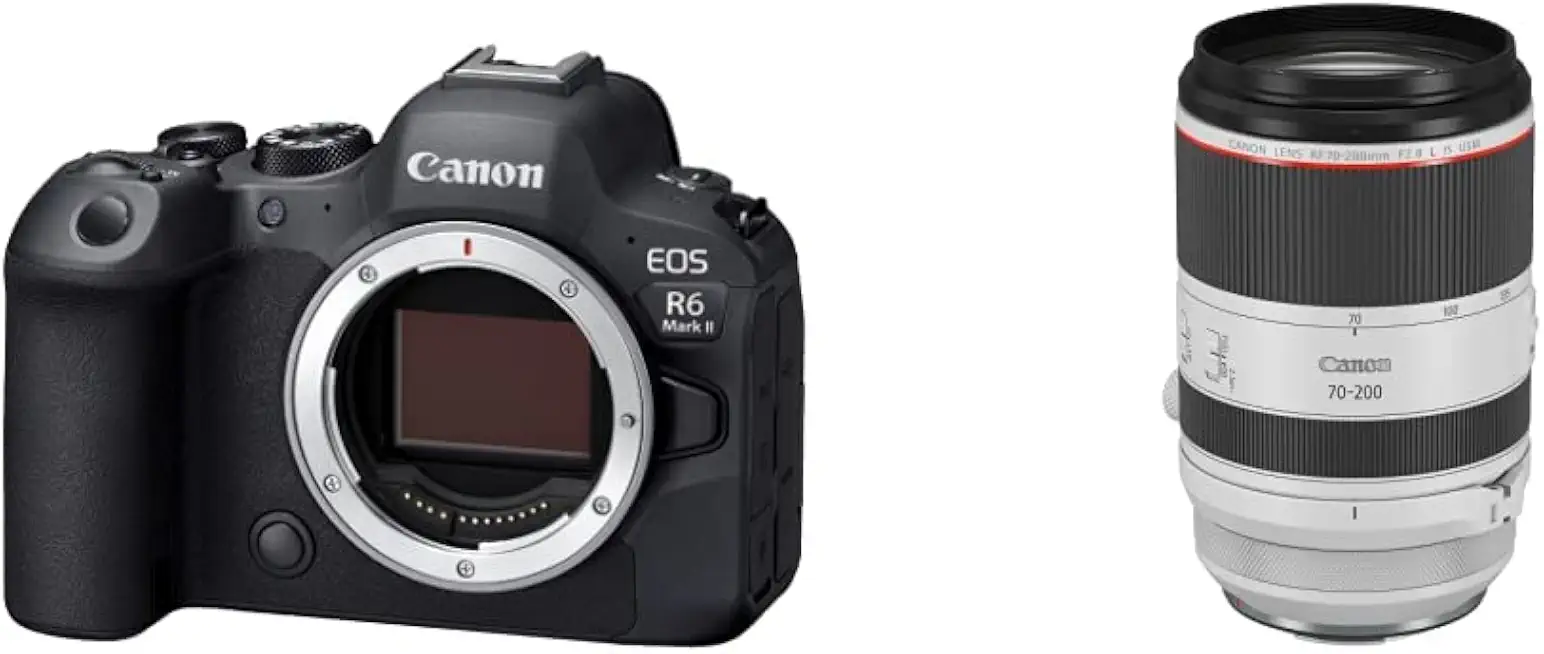
Canon EOS R6 Mark II Review: A Comprehensive Look at the Full Frame Mirrorless Camera
The Canon EOS R6 Mark II is an impressive advancement in Canon's full-frame mirrorless camera lineup. With a robust 24.2MP CMOS sensor, it captures stunning images and videos, making it an excellent choice for both amateur photographers and seasoned professionals. The DIGIC X image processor enhances performance, offering rapid continuous shooting speeds and exceptional low-light capabilities. This camera is designed for versatility, catering to a wide range of photography and videography needs, from fast-paced sports to serene landscapes.
One of the standout features of the Canon EOS R6 Mark II is its advanced subject detection technology, which utilizes deep learning algorithms to recognize and track subjects with remarkable precision. This capability is particularly beneficial for wildlife and sports photographers who require fast autofocus and reliable tracking. Additionally, the camera's ability to oversample 6K video provides filmmakers with high-quality footage that retains detail and clarity, making it a strong contender in the video production space.
In terms of ergonomics, the R6 Mark II maintains a comfortable grip and intuitive layout, allowing for easy access to controls and settings. The fully articulating touchscreen LCD is a significant advantage for vlogging and creative shooting angles, while the electronic viewfinder offers a clear and bright view of your subject. The camera's weather-sealed body adds durability, making it suitable for outdoor use in various conditions.
With a continuous shooting speed of up to 12 frames per second (fps) using the mechanical shutter and 20 fps with the electronic shutter, the R6 Mark II excels in capturing fast-moving subjects. The camera's ISO range of 100-102400 (expandable to 50-204800) allows for impressive performance in low-light situations, reducing noise and maintaining image quality. The combination of these features positions the Canon EOS R6 Mark II as a versatile tool for photographers and videographers alike.
In this review, we will delve deeper into the performance, specifications, and usability of the Canon EOS R6 Mark II, comparing it with similar models on the market. We will also provide insights based on real-world usage and expert testing to help you understand how this camera can meet your creative needs.
Performance and Image Quality
The Canon EOS R6 Mark II delivers exceptional performance across various shooting scenarios, thanks to its advanced 24.2MP full-frame CMOS sensor and DIGIC X image processor. The sensor's design allows for a wide dynamic range and impressive detail retention, producing images that are rich in color and texture. In real-world tests, the camera consistently performed well in both bright and low-light environments, showcasing its versatility.
When shooting in low light, the R6 Mark II's ISO capabilities shine. With a native ISO range of 100-102400, the camera effectively handles noise, allowing for clean images even at higher settings. For example, during a night shoot, images taken at ISO 6400 retained clarity and detail, making it an excellent choice for astrophotography or indoor events. The noise reduction algorithms in the DIGIC X processor further enhance image quality, ensuring that even at the upper limits of ISO, the results are usable.
The continuous shooting speed of the R6 Mark II is a significant advantage for action photography. With a mechanical shutter speed of 12 fps and an electronic shutter speed of 20 fps, the camera can capture fast-moving subjects with ease. During a recent sports event, the camera's autofocus system demonstrated its prowess, quickly locking onto players and maintaining focus as they moved across the frame. This capability is largely due to the advanced subject detection technology, which intelligently tracks subjects, ensuring sharp focus without any missed shots.
In terms of video capabilities, the R6 Mark II supports 6K video oversampling, providing high-quality footage with rich detail. The ability to record in various formats, including 4K at up to 60 fps, makes it a versatile tool for creators. In a recent video project, the oversampling feature allowed for smooth slow-motion effects, enhancing the overall production quality. The camera also supports Canon Log and HDR PQ for greater dynamic range in video, catering to filmmakers looking for professional-grade results.
Design and Build Quality
The design of the Canon EOS R6 Mark II is both functional and aesthetically pleasing. The camera features a sturdy, weather-sealed body that can withstand the rigors of outdoor shooting. This durability is crucial for photographers who work in challenging environments, as it protects the internal components from dust and moisture. The grip is comfortable, allowing for extended shooting sessions without fatigue.
The layout of buttons and dials is intuitive, providing easy access to essential controls. The customizable function buttons allow users to tailor the camera to their shooting style, enhancing workflow efficiency. The fully articulating touchscreen LCD is a significant advantage for those who engage in vlogging or creative compositions, as it enables easy framing from various angles. The electronic viewfinder (EVF) offers a bright and clear display, making it easier to compose shots in bright sunlight.
Battery life is another crucial aspect of the R6 Mark II's design. The camera uses the LP-E6NH battery, which provides a substantial number of shots on a single charge. In practical testing, the battery lasted through a full day of shooting, even with continuous use of the EVF and LCD. This longevity is essential for photographers who may not have the opportunity to recharge during shoots.
Additionally, the camera's connectivity options, including Wi-Fi and Bluetooth, allow for seamless sharing and remote control capabilities. This feature is particularly useful for photographers who need to transfer images quickly or control the camera remotely during shoots.
Comparison with Competing Models
When evaluating the Canon EOS R6 Mark II, it’s essential to compare it with similar models to understand its position in the market. Competing cameras like the Sony A7 IV and Nikon Z6 II offer comparable features, but there are notable differences in performance and usability.
| Feature | Canon EOS R6 Mark II | Sony A7 IV | Nikon Z6 II |
|---|---|---|---|
| Sensor | 24.2MP CMOS | 33MP Exmor R CMOS | 24.5MP BSI CMOS |
| Continuous Shooting | 12 fps (mechanical), 20 fps (electronic) | 10 fps (mechanical), 10 fps (electronic) | 14 fps (electronic) |
| ISO Range | 100-102400 (expandable) | 100-51200 (expandable) | 100-51200 (expandable) |
| Video Recording | 6K oversampling, 4K up to 60 fps | 4K up to 60 fps | 4K up to 60 fps |
| Weight | 680g | 658g | 705g |
In terms of image quality, the Sony A7 IV offers a higher resolution with its 33MP sensor, which may be beneficial for those requiring larger prints or extensive cropping. However, the R6 Mark II's superior continuous shooting speed makes it more suitable for action photography. The Nikon Z6 II, while comparable in resolution, does not match the autofocus performance of the R6 Mark II, particularly in fast-moving scenarios.
When it comes to video capabilities, the R6 Mark II's 6K oversampling provides an edge in terms of detail and flexibility in post-production. While the A7 IV and Z6 II offer strong video performance, the oversampling feature is a significant advantage for filmmakers seeking the highest quality footage.
Real-World Usage Scenarios
Understanding how the Canon EOS R6 Mark II performs in real-world scenarios is crucial for potential buyers. This section will explore various use cases, highlighting the camera's strengths and weaknesses in practical applications.
For wildlife photography, the R6 Mark II excels due to its fast autofocus and continuous shooting capabilities. During a recent wildlife shoot, the camera's ability to lock onto moving subjects allowed for stunning captures of birds in flight. The advanced subject detection technology ensured that focus remained sharp, even as the subjects moved quickly through the frame.
In portrait photography, the camera's impressive low-light performance and color reproduction shine. The ability to shoot at higher ISOs without significant noise allows for creative shooting in dimly lit environments, such as during golden hour or in indoor settings. The R6 Mark II's skin tone rendering is also noteworthy, producing flattering results that require minimal post-processing.
For event photography, the camera's battery life and durability are significant advantages. During a wedding shoot, the R6 Mark II performed reliably throughout the day, capturing candid moments without interruption. The customizable controls allowed for quick adjustments on the fly, ensuring that no moment was missed.
In videography, the R6 Mark II's 6K video oversampling provides filmmakers with exceptional detail and flexibility in editing. During a short film project, the ability to shoot in Canon Log allowed for greater dynamic range, making color grading in post-production more effective. The camera's stabilization features also contributed to smooth footage, even when shooting handheld.
Strengths and Limitations
The Canon EOS R6 Mark II boasts several strengths that make it a compelling choice for both photographers and videographers. Its advanced autofocus system, impressive low-light performance, and versatile video capabilities are among its most notable features. The weather-sealed body adds an essential layer of durability, making it suitable for various shooting conditions.
However, there are some limitations to consider. The camera's 24.2MP resolution may not meet the needs of those requiring extremely high-resolution images for large prints. Additionally, while the battery life is commendable, heavy use of the EVF and continuous shooting may lead to quicker depletion than some competitors. Lastly, the camera's price point may be a consideration for budget-conscious buyers, as it is positioned at a premium level compared to other models in the market.
Conclusion: Is the Canon EOS R6 Mark II Right for You?
In conclusion, the Canon EOS R6 Mark II is a powerful full-frame mirrorless camera that excels in both still photography and videography. Its combination of advanced features, robust performance, and user-friendly design make it a strong contender for anyone looking to elevate their creative work. Whether you are a wildlife photographer, an event shooter, or a filmmaker, the R6 Mark II offers capabilities that can meet your needs.
However, potential buyers should weigh its strengths against the limitations, particularly regarding resolution and price. For those who prioritize speed, low-light performance, and video quality, the R6 Mark II is an excellent investment that will serve you well for years to come.
As an Amazon Associate I earn from qualifying purchases.