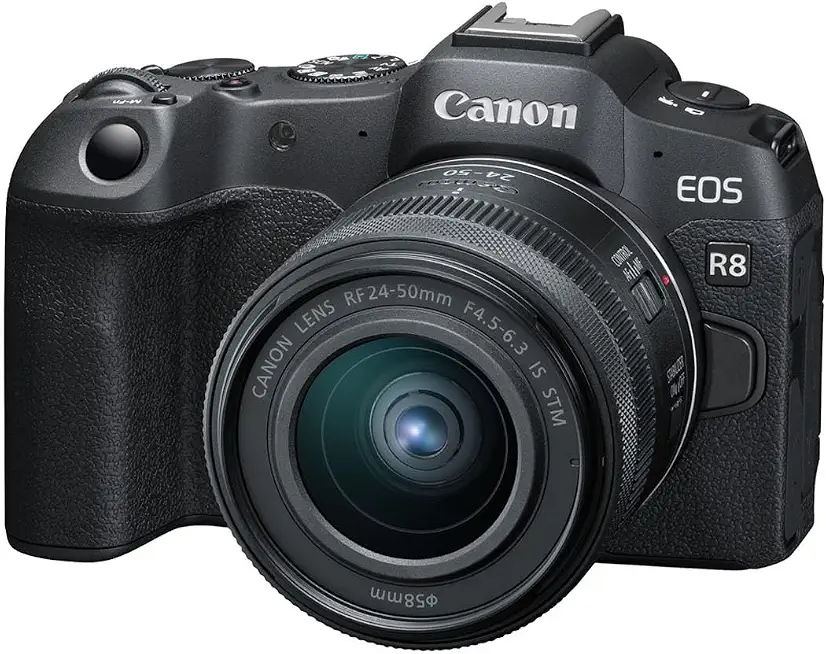
Comprehensive Review of the Canon EOS R8 Mirrorless Camera with 24-50mm Lens
The Canon EOS R8 Mirrorless Camera with 24-50mm Lens stands as a compelling option in the competitive landscape of mirrorless cameras. Designed for both enthusiasts and professionals, this camera combines impressive specifications with a user-friendly interface. With a lightweight body weighing approximately 461 grams, it is portable enough for travel while still delivering high-quality imagery. The R8 features a 24.2 MP full-frame sensor that captures stunning detail and dynamic range, making it suitable for various photography styles, from landscapes to portraits.
One of the standout features of the Canon EOS R8 is its Dual Pixel CMOS AF II system, which provides fast and accurate autofocus across a wide area of the frame. This system is particularly beneficial for capturing moving subjects, a common scenario in sports and wildlife photography. The camera also boasts an ISO range of 100-102400, allowing for excellent performance in low-light conditions, making it versatile for indoor and nighttime shooting.
The R8 supports 4K video recording at up to 60 fps, providing filmmakers with the ability to produce high-quality video content. Additionally, the camera includes Canon’s renowned color science, ensuring that skin tones and colors appear natural and vibrant. The 24-50mm lens, which comes bundled with the camera, is a versatile option that covers a wide range of focal lengths suitable for various shooting scenarios. Its compact design complements the camera's lightweight build, making it an excellent choice for everyday use.
In terms of connectivity, the R8 features built-in Wi-Fi and Bluetooth, allowing for seamless sharing and remote control via smartphones. The camera's vari-angle touchscreen LCD is another highlight, enabling creative shooting angles and easy navigation through settings. Furthermore, with a continuous shooting speed of up to 40 fps in electronic shutter mode, the R8 is well-equipped to handle fast-paced action, ensuring you never miss a moment.
When comparing the Canon EOS R8 to its competitors, such as the Sony A6400 and Nikon Z5, it becomes evident that each camera has its unique strengths. The R8 excels in autofocus performance and video capabilities, while the A6400 offers superior burst shooting speeds. The Z5, on the other hand, presents a more rugged build and dual card slots for added storage flexibility. Considering these factors, the Canon EOS R8 positions itself as a versatile option for those seeking a balance between still photography and videography.
Design and Build Quality
The design of the Canon EOS R8 is both functional and aesthetically pleasing. The camera features a robust yet lightweight body, crafted from a combination of polycarbonate and magnesium alloy, providing durability without excessive weight. This construction is particularly advantageous for photographers who often carry their gear for extended periods.
Ergonomically, the R8 fits comfortably in hand, with a well-placed grip that allows for stable shooting. The layout of buttons and dials is intuitive, making it easy to adjust settings on the fly. The presence of a mode dial, customizable function buttons, and a dedicated video record button enhances usability, especially for those transitioning from DSLR to mirrorless systems.
The vari-angle touchscreen LCD is a significant upgrade, offering flexibility for creative compositions. This feature is particularly useful for vlogging or capturing low-angle shots, as it allows you to frame your subject easily. The electronic viewfinder (EVF) offers a high resolution of 3.69 million dots, providing a clear and detailed view of your composition, which is critical for precise focusing and exposure adjustments.
In terms of durability, the R8 is weather-sealed, providing a level of protection against dust and moisture. This feature is essential for outdoor photographers who may encounter unpredictable weather conditions. However, it is important to note that while the camera can withstand some elements, it is not fully waterproof and should be handled with care in extreme conditions.
Image Quality and Performance
Image quality is where the Canon EOS R8 truly shines. With its 24.2 MP full-frame sensor, the camera delivers exceptional detail and vibrant colors. The sensor's design minimizes noise, even at higher ISO settings, enabling you to shoot in low-light scenarios without sacrificing image quality. The ISO performance is particularly impressive, with clean images up to ISO 6400, and acceptable performance extending to ISO 25600, making it suitable for indoor events or nighttime photography.
The Dual Pixel CMOS AF II system enhances the camera's performance by providing fast and reliable autofocus. With 1,053 AF points covering nearly 100% of the frame, you can expect accurate focus even on moving subjects. The eye-detection autofocus works remarkably well for portrait photography, ensuring that your subject's eyes are sharp, which is crucial for professional results.
In terms of dynamic range, the R8 performs admirably, capturing details in both highlights and shadows. This characteristic is vital for landscape photographers who need to retain detail in bright skies and dark foregrounds. The camera's built-in HDR mode further enhances this capability, allowing for stunning images in high-contrast scenes.
The 24-50mm lens complements the camera's performance well, providing sharpness across the zoom range. It features a fast maximum aperture of f/4, which, while not the widest, is sufficient for most general photography needs. The lens also includes image stabilization, which helps reduce camera shake during handheld shooting, especially at slower shutter speeds.
Video Capabilities and Features
The Canon EOS R8 is not just a stills camera; it is also a robust tool for videographers. The ability to shoot 4K video at 60 fps, along with 10-bit 4:2:2 internal recording, positions the R8 as a formidable competitor in the mirrorless market. This specification allows for greater color grading flexibility in post-production, making it ideal for filmmakers who want to achieve a professional look.
Additionally, the camera supports various video formats, including CLOG3, which enhances dynamic range and color accuracy. This feature is particularly beneficial for those shooting in diverse lighting conditions, as it allows for more control over the final output. The inclusion of a microphone input and headphone output is another advantage, providing essential audio monitoring capabilities for video production.
For vloggers, the vari-angle touchscreen is a significant asset, allowing you to monitor your framing while recording. The camera also features a Digital IS option, which stabilizes video footage, making it smoother during handheld shooting. However, it is essential to note that using this feature may crop the image slightly, which could impact wide-angle shots.
In terms of video quality, the R8 performs admirably, with excellent color reproduction and detail retention. The autofocus system remains active during video recording, ensuring that your subjects remain in focus, even as they move. This capability is crucial for dynamic shooting environments, such as events or action scenes.
Connectivity and Usability
The Canon EOS R8 excels in connectivity options, making it easy to share images and videos. The built-in Wi-Fi and Bluetooth allow for seamless pairing with smartphones and tablets, enabling quick uploads to social media or cloud storage. The Canon Camera Connect app enhances this experience by providing remote control capabilities, allowing you to adjust settings and capture images from a distance.
The camera also features a USB-C port, which supports fast data transfer and can be used for charging. This feature is particularly beneficial for on-the-go photographers who may not have access to a power source. Additionally, the HDMI output allows for direct connection to external monitors, which is useful for video production and live streaming.
In terms of usability, the R8's menu system is intuitive and user-friendly. Canon has streamlined the interface, making it easy to navigate through settings, whether you are adjusting exposure, autofocus modes, or playback options. The customizable function buttons allow you to tailor the camera to your shooting style, ensuring that essential settings are always within reach.
The battery life of the R8 is rated at approximately 370 shots per charge, which is decent for a mirrorless camera. However, for extended shooting sessions, it is advisable to carry a spare battery, especially if you plan to shoot video or use the camera extensively in burst mode. The camera’s power-saving features, such as automatic sleep mode, help conserve battery life during idle periods.
Comparative Analysis with Competitors
| Feature | Canon EOS R8 | Sony A6400 | Nikon Z5 |
|---|---|---|---|
| Sensor Resolution | 24.2 MP | 24.2 MP | 24.3 MP |
| Autofocus Points | 1,053 | 425 | 273 |
| ISO Range | 100-102400 | 100-32000 | 100-51200 |
| Video Recording | 4K 60 fps | 4K 30 fps | 4K 30 fps |
| Weight | 461 g | 403 g | 675 g |
| Battery Life (CIPA) | 370 shots | 410 shots | 390 shots |
Real-World Usage Scenarios
| Use Case | Estimated Performance | Operating Range |
|---|---|---|
| Portrait Photography | Sharp focus on eyes, natural skin tones | ISO 100-3200 |
| Landscape Photography | Excellent dynamic range, vibrant colors | ISO 100-400 |
| Event Photography | Fast autofocus, burst shooting capability | ISO 400-6400 |
| Vlogging | Clear video quality, reliable autofocus | ISO 100-6400 |
Conclusion and Expert Verdict
The Canon EOS R8 Mirrorless Camera with 24-50mm Lens is a well-rounded option for photographers and videographers alike. Its combination of a high-resolution full-frame sensor, advanced autofocus system, and robust video capabilities makes it suitable for a variety of shooting scenarios. The lightweight design and weather-sealed body enhance its portability and durability, making it an excellent choice for travel and outdoor photography.
While it competes well with similar models from Sony and Nikon, the R8's strengths lie in its autofocus performance and video features, which may appeal to content creators. However, potential buyers should consider the battery life and the lens options available for the RF mount, as these factors may influence long-term satisfaction with the system.
Overall, the Canon EOS R8 is an ideal choice for those seeking a versatile mirrorless camera that excels in both stills and video, providing a great balance of performance, usability, and image quality.
As an Amazon Associate I earn from qualifying purchases.