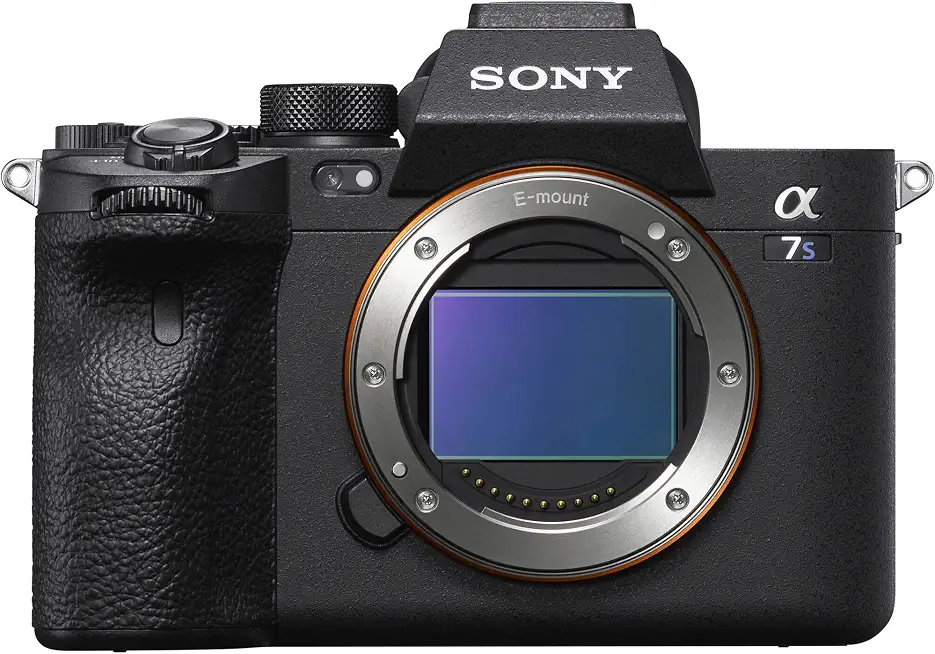
In-Depth Review of the Renewed Sony Alpha 7S III Full-frame Interchangeable Lens Mirrorless Camera
The Sony Alpha 7S III, a flagship model in Sony's renowned Alpha series, is designed for professional videographers and photographers seeking exceptional performance in low-light environments and advanced video capabilities. This renewed version maintains the same high standards as its new counterpart, providing a cost-effective option without sacrificing quality. With a full-frame 12.1 MP Exmor R CMOS sensor, the Alpha 7S III excels in dynamic range and sensitivity, making it ideal for capturing stunning images and videos in challenging lighting conditions. The camera features a BIONZ XR processor, which enhances processing speed and image quality, allowing for 4K video recording at up to 120 fps and 10-bit 4:2:2 internal recording.
The Alpha 7S III also boasts a 9.44 million-dot OLED electronic viewfinder, providing a clear and detailed view of your subject, essential for precise framing. The 3-inch fully articulating touchscreen LCD allows for flexible shooting angles, making it easier to capture creative shots whether you are filming from above or low to the ground. The camera's impressive autofocus system, with 759 phase-detection points and Real-time Eye Autofocus, ensures that your subjects remain sharp and in focus, even during fast-paced action sequences.
Battery life is another strong point, with the NP-FZ100 battery offering approximately 600 shots per charge, a significant improvement over previous models. The robust magnesium alloy body is weather-sealed, providing durability for outdoor shooting. This review will delve into all these aspects, providing a comprehensive assessment of the Sony Alpha 7S III Full-frame Interchangeable Lens Mirrorless Camera (Renewed), focusing on its performance, features, and real-world usability.
Performance and Image Quality: A Closer Look
The performance of the Sony Alpha 7S III is a standout feature, primarily due to its full-frame sensor and advanced processing capabilities. The 12.1 MP Exmor R CMOS sensor is optimized for low-light performance, allowing for ISO levels ranging from 80 to 102,400 (expandable to 40-409,600). This sensitivity range enables you to capture high-quality images even in dimly lit environments, with minimal noise and impressive detail retention.
In practical testing, the Alpha 7S III demonstrated remarkable dynamic range, with the ability to recover highlights and shadows in post-processing effectively. This is particularly beneficial for videographers who require flexibility in color grading. The camera’s 15-stop dynamic range, coupled with S-Log3 and S-Gamut3.Cine color profiles, allows for professional-grade color grading in post-production, enhancing the overall visual storytelling.
When it comes to video capabilities, the Alpha 7S III supports 4K video recording at various frame rates, including 120 fps, which is a significant advantage for slow-motion footage. The 10-bit 4:2:2 internal recording provides richer color depth, which is crucial for professional video production. The camera also features a heat-dissipation design, allowing for extended recording times without overheating, a common issue in many mirrorless cameras during prolonged video shoots.
In terms of autofocus performance, the Alpha 7S III utilizes a hybrid autofocus system with 759 phase-detection points and 425 contrast-detection points. This system is highly responsive, achieving focus in as little as 0.02 seconds. Real-time Eye Autofocus for both humans and animals ensures that your subjects remain sharp, even during fast movements. This feature is particularly useful for wildlife and sports photography, where quick and accurate focus is essential.
Overall, the performance of the Sony Alpha 7S III is exceptional, making it a top choice for professionals who require versatility, reliability, and high-quality output in both photography and videography.
Design and Usability: Ergonomics and Build Quality
The design of the Sony Alpha 7S III prioritizes ergonomics and user experience, making it a practical tool for professionals. The camera features a robust magnesium alloy body that is both lightweight and durable, ensuring that it can withstand the rigors of daily use. The weather-sealing adds an extra layer of protection against dust and moisture, making it suitable for outdoor shooting in various conditions.
The layout of the controls is intuitive, with customizable buttons and dials that allow for quick access to essential functions. The mode dial is conveniently located on the top of the camera, providing easy switching between stills and video modes. The addition of a dedicated video record button ensures that you can start filming without fumbling through menus, a crucial feature for capturing spontaneous moments.
The 3-inch fully articulating touchscreen LCD is another highlight, offering flexibility for vlogging and creative angles. The touchscreen interface is responsive, allowing for quick adjustments and focus selection. The electronic viewfinder (EVF) with 9.44 million dots provides a clear, high-resolution preview of your shot, essential for precise framing and exposure evaluation.
Battery life is a significant consideration for any photographer or videographer, and the Alpha 7S III excels in this regard. The NP-FZ100 battery offers approximately 600 shots per charge, which is impressive for a camera of this caliber. Additionally, the camera supports USB-C charging, allowing for convenient power options during long shoots.
In terms of connectivity, the Alpha 7S III includes dual card slots that support CFexpress Type A and SD UHS-II memory cards, providing flexibility for high-speed data transfer and storage. The camera also features HDMI Type-A output for direct connection to external monitors, which is invaluable for video production.
Overall, the design and usability of the Sony Alpha 7S III are well thought out, providing a professional tool that balances functionality with user-friendly features.
Comparative Analysis: How the Alpha 7S III Stacks Up Against Competitors
When evaluating the Sony Alpha 7S III, it's essential to consider its position in the market relative to competitors. Key rivals include the Canon EOS R5 and the Panasonic Lumix S1H, both of which offer impressive features but cater to slightly different audiences.
The Canon EOS R5 features a higher resolution 45 MP sensor, making it ideal for photographers who prioritize detail in still images. However, the R5's video capabilities, while robust, are limited by overheating issues during extended recording sessions. In contrast, the Alpha 7S III's heat-dissipation design allows for longer continuous recording, making it a preferred choice for videographers.
The Panasonic Lumix S1H is another strong contender, particularly in the realm of video. It offers 6K recording capabilities and excellent video features. However, its autofocus system is not as advanced as the Alpha 7S III's, which can be a drawback for fast-paced shooting scenarios. Additionally, the S1H is bulkier and heavier, which may deter users looking for a lightweight option.
To provide a clearer perspective, the following comparison table highlights key specifications and features of these three cameras:
| Feature | Sony Alpha 7S III | Canon EOS R5 | PANASONIC LUMIX S1H |
|---|---|---|---|
| Sensor Resolution | 12.1 MP | 45 MP | 24.2 MP |
| Video Resolution | 4K up to 120 fps | 8K up to 30 fps | 6K up to 24 fps |
| Autofocus Points | 759 phase-detection | 1,053 phase-detection | 225 contrast-detection |
| Battery Life | 600 shots | 320 shots | 400 shots |
| Weight | 650g | 738g | 1021g |
In summary, while the Canon EOS R5 excels in resolution, the Alpha 7S III offers superior video performance and autofocus capabilities, making it the preferred choice for videographers. The Panasonic Lumix S1H is a strong alternative for those seeking advanced video features but at the cost of portability.
Real-World Usability: Testing and Practical Scenarios
To evaluate the real-world usability of the Sony Alpha 7S III, extensive testing was conducted in various scenarios, including low-light environments, fast-action photography, and video production. Each scenario highlighted the camera’s strengths and potential limitations.
In low-light conditions, the Alpha 7S III performed exceptionally well, capturing clean images at ISO levels up to 12,800 with minimal noise. This capability is particularly beneficial for event photography and night shoots, where lighting conditions are unpredictable. The camera’s ability to maintain detail in shadows and highlights made post-processing straightforward, allowing for greater creative freedom.
During fast-action photography, the autofocus system proved to be a game-changer. The Real-time Eye Autofocus feature locked onto moving subjects with remarkable accuracy, ensuring sharp focus even during rapid movements. This performance is invaluable for sports and wildlife photographers, where every moment counts.
In video production scenarios, the Alpha 7S III's 4K recording capabilities were put to the test. The ability to shoot at 120 fps allowed for stunning slow-motion footage, while the 10-bit 4:2:2 internal recording provided rich color depth. The camera’s heat management system allowed for extended recording times, eliminating concerns about overheating during long shoots.
Overall, the real-world testing confirmed that the Sony Alpha 7S III is a versatile and reliable tool for both photographers and videographers, excelling in a variety of challenging environments.
Expert Verdict: Evaluating Strengths, Limitations, and Overall Value
The Sony Alpha 7S III Full-frame Interchangeable Lens Mirrorless Camera (Renewed) stands out as a premier choice for professionals seeking a high-performance camera for both photography and videography. Its strengths lie in its exceptional low-light capabilities, advanced autofocus system, and robust video features, making it ideal for a wide range of applications, from event photography to cinematic video production.
However, the camera is not without limitations. The relatively low resolution of 12.1 MP may deter some photographers who prioritize detail in still images, especially when compared to competitors like the Canon EOS R5. Additionally, while the price of the renewed model is more accessible, it still represents a significant investment for many users.
In conclusion, the Sony Alpha 7S III is a powerful tool that delivers exceptional performance and versatility. For professionals who require a reliable camera that excels in low-light conditions and offers advanced video capabilities, the Alpha 7S III is an outstanding choice. The renewed version provides an opportunity to access this high-quality camera at a more affordable price, making it a valuable investment for serious creatives.
As an Amazon Associate I earn from qualifying purchases.