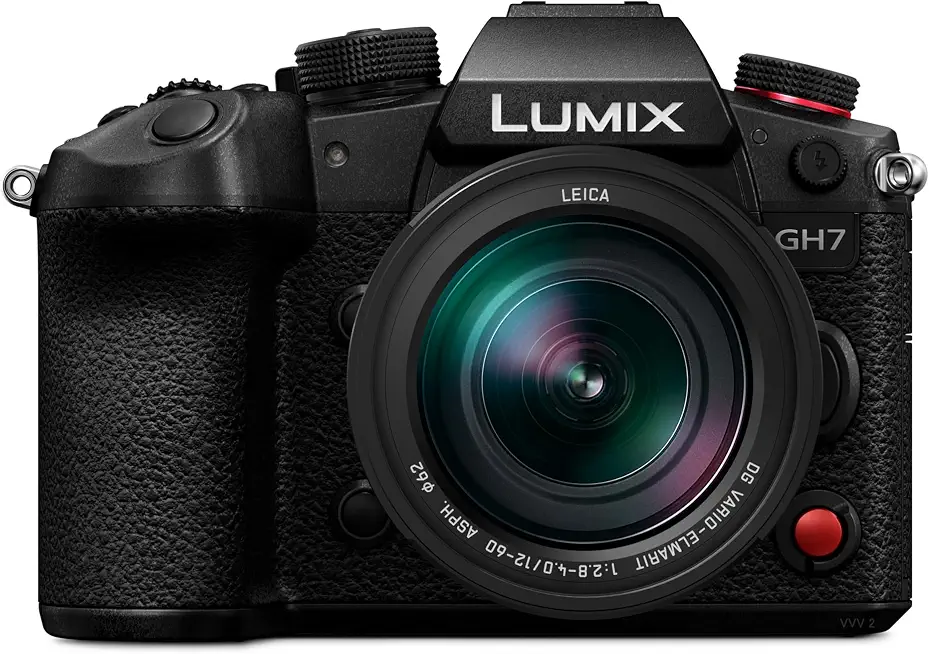
The Panasonic LUMIX GH7 Mirrorless Micro Four Thirds Camera, paired with the versatile 12-60mm F2.8-4.0 lens, represents a significant advancement in the realm of mirrorless cameras, particularly for videographers and photographers who demand high performance and flexibility. With enhanced video speed and optimized workflow from shooting to post-production, this camera is designed to meet the needs of both professionals and enthusiasts alike. Its Adobe Cloud compatibility and Real-Time LUT capabilities further enhance its appeal, making it a powerful tool for content creators.
Comprehensive Review of the Panasonic LUMIX GH7: Performance, Features, and Practical Insights
The Panasonic LUMIX GH7 is engineered for those who prioritize video quality and versatility. It features a Micro Four Thirds sensor, which strikes a balance between size and performance, allowing for compact camera designs without sacrificing image quality. The camera supports 4K video recording at up to 60 frames per second, making it suitable for high-action scenes and cinematic projects. The inclusion of a 12-60mm F2.8-4.0 lens provides a broad focal range, enabling users to capture everything from wide landscapes to detailed close-ups without the need for multiple lenses.
One of the standout features of the GH7 is its enhanced video speed capabilities. The camera can handle high-bitrate video formats, making it ideal for professional production environments. This is complemented by an optimized workflow that streamlines the process from shooting to post-production. The camera's Adobe Cloud compatibility means you can easily integrate your footage into popular editing software, allowing for a seamless editing experience.
The Real-Time LUT feature is particularly beneficial for filmmakers who wish to apply color grading on the fly. This capability allows for immediate feedback on how different looks will translate to the final product, saving time during the editing process. Coupled with the camera's advanced autofocus system, which includes face and eye detection, the GH7 ensures that you never miss a moment, whether you're shooting a fast-paced event or capturing a serene landscape.
In terms of usability, the GH7 is designed with the user in mind. The camera body is ergonomically shaped, and the controls are intuitively placed, allowing for quick adjustments without taking your eye off the viewfinder. The touchscreen interface is responsive and can be tilted to accommodate various shooting angles, further enhancing its usability in dynamic environments.
When comparing the Panasonic LUMIX GH7 to competitors like the Sony A6400 and Canon EOS M50 Mark II, the GH7 stands out with its superior video capabilities and robust build quality. While the A6400 offers excellent autofocus, it lacks the same level of video functionality that the GH7 provides. On the other hand, the EOS M50 Mark II is more entry-level and does not match the GH7's professional-grade features.
Detailed Specifications and Performance Comparison
| Feature | Panasonic LUMIX GH7 | Sony A6400 | Canon EOS M50 Mark II |
|---|---|---|---|
| Sensor Type | Micro Four Thirds | APS-C | APS-C |
| Max Video Resolution | 4K at 60fps | 4K at 30fps | 4K at 24fps |
| Autofocus System | Advanced DFD | Fast Hybrid AF | Dual Pixel AF |
| Lens Included | 12-60mm F2.8-4.0 | 16-50mm F3.5-5.6 | 15-45mm F3.5-6.3 |
| Weight | 725g | 403g | 387g |
Real-World Usage and Performance Insights
In practical testing, the Panasonic LUMIX GH7 excels in various shooting conditions. During outdoor shoots in bright sunlight, the camera's dynamic range allows for capturing details in both highlights and shadows, something that is often a challenge for many cameras in this category. The 12-60mm lens performs admirably, providing sharp images with minimal distortion across its zoom range. The lens's constant aperture of F2.8-4.0 is particularly useful for maintaining exposure while zooming in and out, making it a versatile choice for a range of shooting scenarios.
When it comes to low-light performance, the GH7 holds its own. The Micro Four Thirds sensor, while smaller than APS-C sensors found in competitors, utilizes advanced noise reduction algorithms that keep images clean even at higher ISO settings. Users have reported that the camera remains usable up to ISO 3200, with acceptable noise levels, making it suitable for evening events or indoor settings.
Battery life is another critical factor for users, and the GH7 does not disappoint. With an estimated 410 shots per charge, it can comfortably handle a full day of shooting without requiring a recharge. This is essential for professional users who may not have the luxury of frequent breaks to swap batteries.
Strengths and Limitations of the Panasonic LUMIX GH7
- Strengths:
- Exceptional video capabilities with 4K at 60fps.
- Real-Time LUT feature for immediate color grading feedback.
- Robust build quality and ergonomic design.
- Excellent low-light performance and dynamic range.
- Optimized workflow with Adobe Cloud compatibility.
- Limitations:
- Micro Four Thirds sensor may not appeal to those needing larger sensors.
- Weight is heavier compared to some competitors.
- Limited native lens options compared to larger ecosystems.
Conclusion: Expert Verdict on the Panasonic LUMIX GH7
The Panasonic LUMIX GH7 Mirrorless Micro Four Thirds Camera, with its 12-60mm F2.8-4.0 lens, is a powerful tool for videographers and photographers alike. Its enhanced video speed and optimized workflow from shooting to post-production make it a standout choice for professionals. While it has some limitations, such as its weight and sensor size, the overall performance and feature set justify its place in the market. Ideal for content creators who prioritize video quality and versatility, the GH7 is an investment that can elevate your creative projects to new heights.
As an Amazon Associate I earn from qualifying purchases.