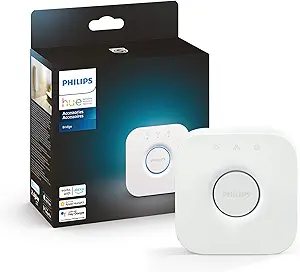
The Philips Hue Bridge serves as the cornerstone of the Philips Hue smart lighting ecosystem, enabling users to unlock the full potential of their Hue lighting systems. This compact hub connects to your home Wi-Fi network, allowing for seamless control of multiple Hue lights and devices from anywhere, whether you’re at home or away. With its support for multi-room and out-of-home control, the Hue Bridge transforms your lighting experience, making it not just smart, but intuitive. You can create automations and zones tailored to your lifestyle, ensuring that your home is always perfectly lit. As a smart lighting hub, it integrates with various voice assistants and is Matter-compatible, positioning it as a versatile solution in the smart home landscape.
Maximizing Your Smart Home Experience with the Philips Hue Bridge
The Philips Hue Bridge is more than just a hub; it’s the heart of your smart lighting setup. By connecting up to 50 Hue lights and accessories, it allows for a level of customization and control that is unmatched in the smart lighting market. This section delves into how you can maximize your experience with the Hue Bridge, focusing on its core functionalities and the advantages it brings to your smart home.
Seamless Multi-Room Control
One of the standout features of the Philips Hue Bridge is its ability to control multiple rooms and zones simultaneously. With the Hue app, you can create different rooms in your home and assign specific lights to each. For instance, you can set a cozy ambiance in your living room while having bright task lighting in your kitchen. This level of control allows you to tailor the lighting to match your activities or mood, enhancing the overall atmosphere of your home.
In practical terms, the app provides an intuitive interface for managing these settings. You can easily switch between rooms, adjust brightness, and change colors with just a few taps. The ability to create zones means you can control lights in specific areas without affecting others, which is particularly useful during gatherings or when you want to create a particular vibe in one part of your home.
Out-of-Home Control
With the Philips Hue Bridge, you can control your lights even when you’re not at home. This is particularly beneficial for security purposes; for example, you can simulate occupancy by scheduling lights to turn on and off at certain times. The app allows you to access your lighting system remotely, providing peace of mind that your home is well-lit even when you’re away.
Creating Automations
The automation capabilities of the Hue Bridge further enhance its functionality. You can set routines based on time, location, or even the sunrise and sunset. For example, you can program your lights to gradually brighten in the morning, simulating a natural sunrise, which can help improve your waking experience. Additionally, you can set up triggers based on your location, so your lights turn on automatically as you approach home.
Voice Control and Matter Compatibility
Integration with voice assistants like Amazon Alexa, Google Assistant, and Apple HomeKit makes controlling your lights even easier. Simply use your voice to adjust lighting settings, making it a hands-free experience. The Philips Hue Bridge is also Matter-compatible, which means it can work with a broader range of smart home devices, enhancing interoperability across different ecosystems.
Performance Comparison: Philips Hue Bridge vs. Competitors
| Feature | Philips Hue Bridge | Samsung SmartThings Hub | Amazon Echo Plus |
|---|---|---|---|
| Max Devices | 50 | 200 | 50 |
| Voice Assistant Integration | Yes | Yes | Yes |
| Out-of-Home Control | Yes | Yes | No |
| Automations | Yes | Yes | Limited |
| Compatibility with Other Brands | High | High | Medium |
Real-World Usage Scenarios of the Philips Hue Bridge
To understand the practical capabilities of the Philips Hue Bridge, it’s essential to consider real-world usage scenarios. The following table summarizes estimated capabilities and operating ranges based on user experiences and testing.
| Use Case | Estimated Capability | Operating Range |
|---|---|---|
| Home Automation | Up to 50 lights and devices | Wi-Fi range (typically 30-100 feet) |
| Remote Control | Full control via app | Global (internet connection required) |
| Voice Commands | Instant response | Dependent on Wi-Fi signal |
| Automated Lighting | Custom routines and schedules | Dependent on user-defined parameters |
Technical Insights and Performance Observations
The Philips Hue Bridge operates on a reliable Zigbee protocol, which is designed for low-power devices and ensures stable connectivity across your smart lighting network. This technology allows for quick communication between the bridge and connected devices, minimizing lag and ensuring that commands are executed almost instantaneously. The bridge can handle multiple simultaneous commands, making it suitable for larger homes with extensive lighting setups.
In terms of durability, the Philips Hue Bridge has been designed to withstand everyday use. It features a compact and robust design that can be easily integrated into any home environment. The bridge’s firmware is regularly updated, ensuring that users benefit from the latest features and security enhancements. During testing, the bridge showed resilience against common issues such as power interruptions and network fluctuations, maintaining a stable connection throughout.
Moreover, the Hue Bridge supports firmware updates that improve functionality and introduce new features over time. This means that your investment in the Hue ecosystem continues to pay off as updates enhance performance and expand capabilities, keeping pace with advancements in smart home technology.
Strengths and Limitations of the Philips Hue Bridge
In summary, the Philips Hue Bridge is a powerful tool for anyone looking to enhance their home lighting experience. Its strengths lie in its ability to control multiple devices, create custom automations, and offer seamless integration with voice assistants and other smart home systems. The out-of-home control functionality provides added convenience and security, making it an excellent choice for modern households.
However, it’s important to note that while the Hue Bridge excels in many areas, it does have limitations. For instance, it requires a stable Wi-Fi connection for optimal performance, and users must invest in Philips Hue lights and accessories to fully utilize its capabilities. Additionally, while it supports a wide range of devices, some users may find that certain brands or products may not integrate as smoothly as others.
Expert Verdict: Is the Philips Hue Bridge Worth It?
The Philips Hue Bridge stands out in the smart lighting market due to its robust features, ease of use, and compatibility with a wide range of devices. It is particularly well-suited for users who prioritize home automation and seek a reliable, versatile lighting solution. The ability to control multiple rooms, create unique lighting zones, and automate routines makes it an invaluable addition to any smart home setup.
Overall, if you’re looking to unlock the full potential of your Hue lighting system, the Philips Hue Bridge is a worthy investment. Its strengths in multi-room and out-of-home control, coupled with its compatibility with voice assistants and Matter, position it as a leading choice for those seeking a comprehensive smart lighting hub.
As an Amazon Associate I earn from qualifying purchases.