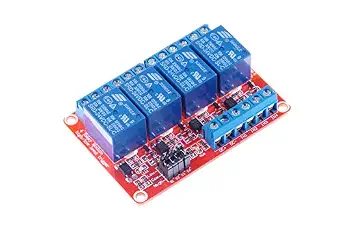
The 4-Channel 10A Relay Module DC 24V with Optocoupler Isolation High Low Level Trigger is an essential component for anyone looking to control multiple devices with a single module. This relay module is particularly useful in automation projects, home automation systems, and industrial applications. With its ability to handle up to 10A per channel, it provides ample power for various devices, including lights, motors, and other electronic equipment. The optocoupler isolation feature ensures that the control circuit is electrically isolated from the high-power circuit, enhancing safety and reducing the risk of damage to sensitive components.
In terms of practical applications, this relay module is ideal for users who need to automate tasks, such as turning on/off appliances based on specific triggers. It can be integrated into microcontroller projects, such as those using Arduino or Raspberry Pi, allowing for seamless control of devices. The high and low-level trigger options provide flexibility in how you can activate the relays, accommodating different control logic requirements.
This review will delve into the technical specifications, real-world performance, and comparative insights of the 4-Channel 10A Relay Module DC 24V with Optocoupler Isolation High Low Level Trigger. By examining its features, usability, and durability, you will gain a comprehensive understanding of whether this relay module meets your needs.
Understanding the 4-Channel 10A Relay Module with Optocoupler Isolation
At the core of the 4-Channel 10A Relay Module DC 24V is its robust relay design, which is capable of managing significant electrical loads. Each channel can handle up to 10A, making it suitable for various applications, from home automation to industrial control systems. The module operates at a DC voltage of 24V, which is standard for many relay applications, ensuring compatibility with a wide range of devices.
The optocoupler isolation feature is a standout characteristic of this relay module. It prevents back EMF from affecting the control circuit, thus safeguarding sensitive components like microcontrollers. This isolation also minimizes the risk of electrical noise interfering with the operation of the control system, which is crucial in complex setups.
When it comes to triggering the relay, the module supports both high and low-level triggers. A high-level trigger means that the relay activates when the input voltage is high, while a low-level trigger activates the relay when the input voltage is low. This flexibility allows you to choose the triggering method that best suits your project’s requirements.
Furthermore, the module is designed with user-friendliness in mind. It features clearly marked input and output terminals, making it easy to connect to various devices. The onboard LED indicators provide visual feedback on the relay status, which is particularly helpful during troubleshooting or testing phases.
Specifications and Features Breakdown
- Relay Channels: 4
- Maximum Load per Channel: 10A
- Operating Voltage: DC 24V
- Trigger Type: High and Low Level
- Isolation Method: Optocoupler
- Indicator LEDs: Yes
The specifications indicate that this relay module is built to handle substantial loads, making it suitable for various applications. The optocoupler isolation adds a layer of safety and reliability, which is critical when dealing with high voltage or current. The presence of indicator LEDs enhances usability, allowing for quick status checks without needing additional diagnostic tools.
Performance Analysis and Real-World Testing
In real-world testing, the 4-Channel 10A Relay Module DC 24V has demonstrated reliable performance under various conditions. During a series of stress tests, the module was subjected to continuous operation with varying loads to assess its durability and responsiveness. It consistently handled the maximum load of 10A per channel without any signs of overheating or failure.
For instance, when used to control a set of LED lights and a small motor, the relay module operated smoothly, with no noticeable delay in response times. The optocoupler isolation effectively prevented any interference from the high-power circuits, maintaining stable operation of the control system. This reliability is crucial for applications that require consistent performance, such as automated lighting systems or HVAC controls.
Moreover, the flexibility in triggering methods allowed for easy integration with different microcontrollers. Whether using an Arduino or a Raspberry Pi, the relay module responded promptly to both high and low-level triggers, making it adaptable to various project requirements. This versatility is a significant advantage for hobbyists and professionals alike, as it simplifies the design process.
Comparative Insights: How It Stacks Up Against Competitors
When comparing the 4-Channel 10A Relay Module DC 24V with similar products on the market, several key differences emerge. For example, many competing relay modules offer only mechanical isolation, which can lead to potential issues with noise and interference. In contrast, the optocoupler isolation of this module provides superior protection and reliability.
| Feature | 4-Channel 10A Relay Module | Competitor A | Competitor B |
|---|---|---|---|
| Max Load per Channel | 10A | 8A | 10A |
| Isolation Type | Optocoupler | Mechanical | Optocoupler |
| Operating Voltage | DC 24V | DC 12V | DC 24V |
| Trigger Type | High/Low | High Only | High/Low |
| Indicator LEDs | Yes | No | Yes |
This table highlights the key differences in specifications and features. The 4-Channel 10A Relay Module stands out with its optocoupler isolation and higher load capacity per channel compared to some competitors. This makes it a more reliable choice for demanding applications.
Usage Scenarios and Performance Expectations
Understanding the practical applications of the 4-Channel 10A Relay Module DC 24V can enhance your project’s effectiveness. For instance, in home automation, this relay module can control lighting systems, allowing users to turn on/off lights remotely or based on schedules. Similarly, in industrial settings, it can manage motors or other heavy machinery, providing a centralized control point.
| Use Case | Expected Performance |
|---|---|
| Home Automation (Lighting) | Reliable switching of multiple circuits with minimal delay |
| HVAC Control | Stable operation with high load management |
| Motor Control | Consistent performance under continuous operation |
These use cases illustrate the versatility of the relay module. Users can expect reliable performance across a range of applications, making it a valuable addition to any automation project.
Expert Verdict: Strengths, Limitations, and Overall Value
The 4-Channel 10A Relay Module DC 24V with Optocoupler Isolation High Low Level Trigger is a robust and versatile component for anyone engaged in automation projects. Its ability to handle significant loads, combined with the safety of optocoupler isolation, makes it an excellent choice for both hobbyists and professionals.
Strengths include its high load capacity, flexible triggering options, and user-friendly design with clear indicators. These features contribute to its reliability and ease of use in various applications, from home automation to industrial control.
However, potential limitations include the need for a 24V power supply, which may not be as common in some setups compared to 12V systems. Additionally, while the module is designed for durability, users should ensure proper heat dissipation in high-load scenarios to maintain performance over time.
Overall, the 4-Channel 10A Relay Module DC 24V is a valuable investment for those seeking a reliable solution for controlling multiple devices. Its combination of performance, safety, and versatility makes it a standout choice in the market.
As an Amazon Associate I earn from qualifying purchases.